
Table of Contents
Imagine a dog with the intelligence of a Poodle and the gentle loyalty of a Bernese Mountain Dog. Fascinating, right? That's exactly what you'll get when you adopt a Bernedoodle!
Thanks to its adorable looks and exceptional personality, the Bernedoodle became one of the most sought-after designer breeds in recent years.
Its hypoallergenic coat, friendly personality, and overall adaptability make it a popular choice for most dog-loving families!
In this guide, we'll take a closer look at the Bernedoodle's qualities — their traits, temperament, care needs, and more!
RELATED: 10 Cute Designer Dog Breeds That You Wish You Had
Bernedoodle Overview
| Trait | Description |
|---|---|
| Breed Type | Designer (Bernese Mountain Dog × Poodle) |
| Size Variations | Micro mini (10-30 lbs), Mini (25–50 lbs), Medium (50-75 lbs), Standard (70+ lbs) |
| Coat Type | Straight, curly, or wavy (the most common) |
| Colors | Black, white, brown, tricolor (most popular) |
| Lifespan | 10–18 years |
| Temperament | Loyal, goofy, affectionate, intelligent |
| Best For | Families, allergy sufferers, active owners |
| Exercise Needs | Moderate to high |
| Grooming | Regular brushing, professional grooming every 6–8 weeks |
Bernedoodle History and Origin
As its name suggests, the Bernedoodle is a cross between a Bernese Mountain Dog and a standard, miniature, or toy Poodle.
The size of the Poodle parent will also determine if you'll have a micro mini, a mini, a medium, or a standard Bernedoodle.
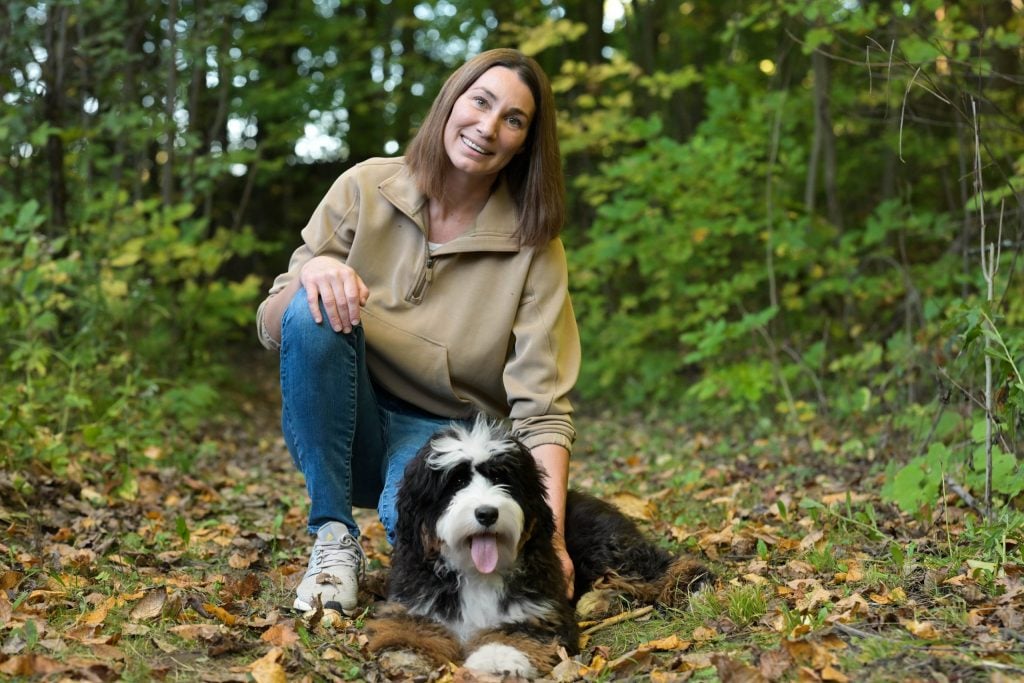
Unlike other accidental mixes, the Bernedoodle was intentionally bred in 2003 by Sherry Rupke of SwissRidge Kennels in Canada.
She started breeding Goldendoodles until her love for Bernese Mountain Dogs led her to combine their calm, affectionate nature with the Poodle's low-shedding coat and intelligence.
Because it's a mixed breed, the Bernedoodle is not officially recognized by the American Kennel Club. However, they're accepted by designer-breed registries such as the American Canine Hybrid Club and the International Designer Canine Registry.
RELATED: 40 Reputable Dog Breeders in the U.S.
Bernedoodle Variations
By Size
Depending on the Poodle parent, a Bernedoodle can be a micro, mini, medium, or standard.
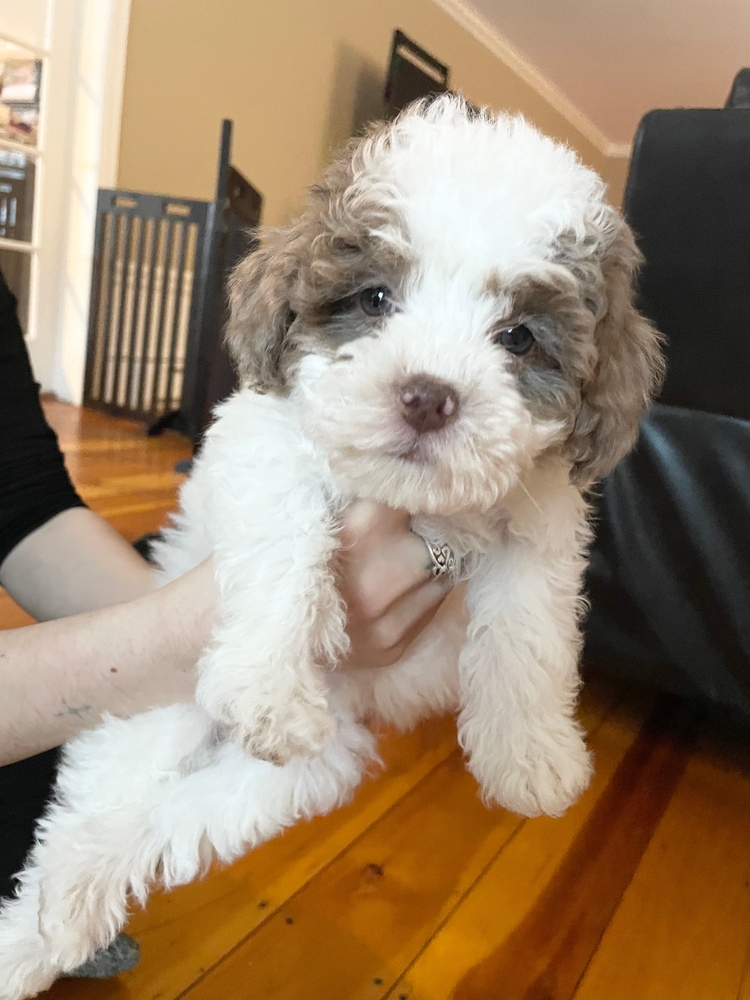 Micro mini Bernedoodles are bred from toy Poodles and a Mini or Bernese Mountain Dog, and they typically weigh between 10 and 30 pounds. They are perfect for people who love a lap dog and live in a small apartment.
Mini Bernedoodles are slightly larger than Micro Minis, weighing 25 to 50 pounds. If not a cross between a toy Poodle and a Bernese Mountain dog, they're also often an offspring of a Bernedoodle parent and a smaller Poodle.
Another larger variation at 50 to 75 pounds is the Medium Bernedoodle. They are the cross between an average-sized Poodle and a Bernese.
And last, but definitely not least, is the Standard Bernedoodle. They are the result of breeding a Bernese Mountain Dog with a Standard Poodle and typically weigh 70+ pounds. They are the best type for active families with backyards!
By Generation
Apart from size, we can also identify a Bernedoodle by its genetic makeup. They are classified into F1, F1b, or F2.
F1 pertains to a first-generation Bernedoodle, which means they are made up of 50% Poodle and 50% Bernedoodle. They are the direct result of these two purebred dogs being mixed.
F1b, which means First Generation Backcross, is a Bernedoodle crossed with another Poodle, which makes them 75% Poodle and 25% Bernese. They are typically more Poodle-like in terms of coat and size.
F2 Bernedoodles, on the other hand, are second generations. They are the offspring of two Bernedoodles, so their traits and features are a bit harder to predict than those of other types.
RELATED: The Vet’s Guide on DNA Tests for Dogs
Bernedoodle Appearance
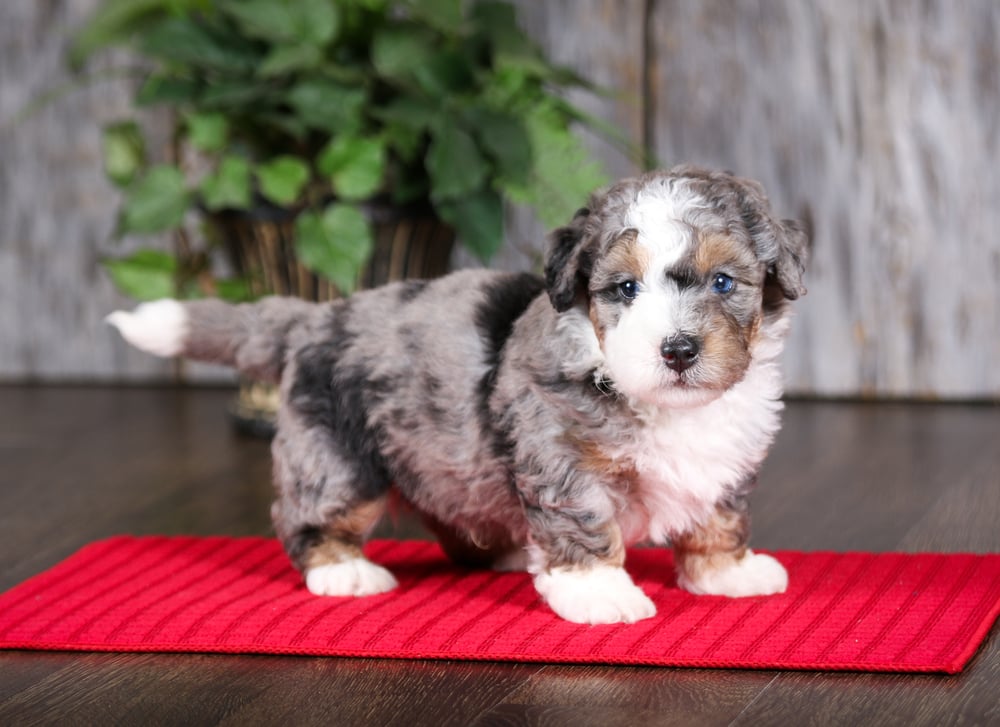
As with other mixed-breed dogs, a Bernedoodle's appearance differs depending on how dominant the genes of one parent than the other parent.
Typically, a Bernedoodle has a wavy coat, a mix of the straight or slightly wavy Bernese hair and the curl of a Poodle fur. This makes a Bernedoodle's coat less likely to shed and more allergy-friendly.
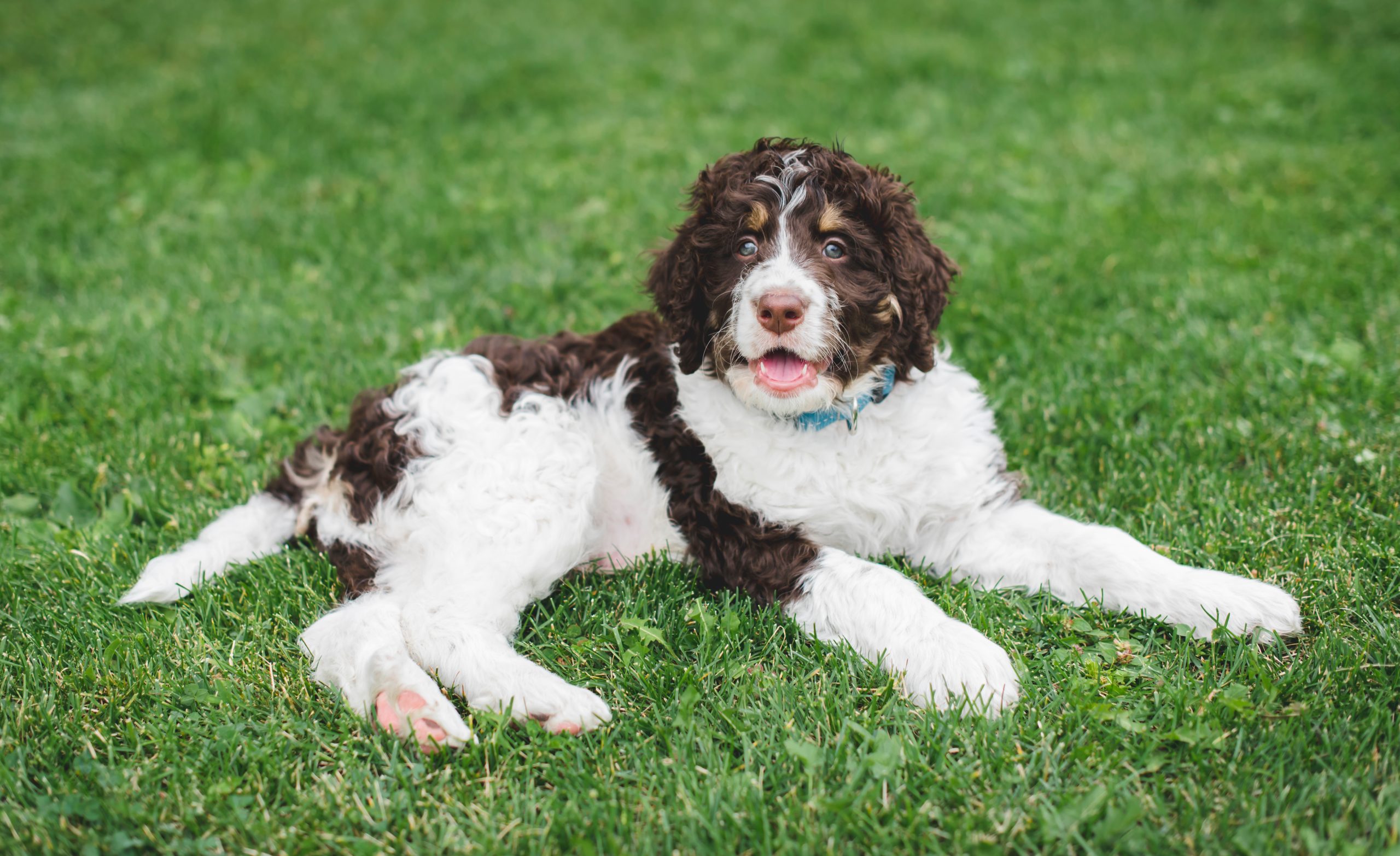
Bernedoodles are available in the following colors and patterns, with tricolor being the most sought-after:
- Tricolor (black, white, and rust/brown)
- Solid color (Black, chocolate, cream, apricot, silver, or red)
- Sable – Cream/tan/orange base with darker hairs, often lightening (clearing) as they mature.
- Phantom – two-toned pattern with tan points on a darker base
- Merle – mottled or marbled pattern of diluted colors
- Parti – a color combination with more than 50% white
- Bi-color – two distinct colors, mostly black and white, red and white, or chocolate and white
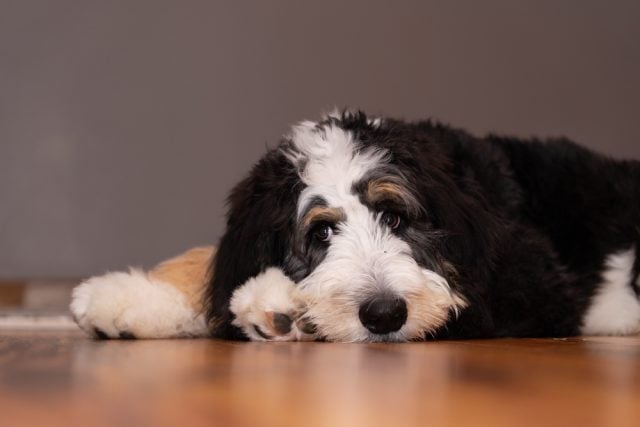
Apart from their striking colors and patterns, another notable trait of a Bernedoodle is their muscular yet soft features, expressive eyes, and teddy-bear-like face that melts hearts.
Muscular yet soft-featured, expressive eyes, and a teddy-bear-like face that melts hearts.
Bernedoodle Temperament and Personality
Bernedoodles are known for being affectionate, playful, goofy, loyal, and social, combining the adorable traits of Bernese Mountain Dogs and Poodles.
They thrive on family interaction and don't do well when left alone for long periods.
Because of their gentle disposition, they are excellent with kids. Bernedoodles are also usually friendly with other pets, but only if properly socialized.
This designer breed is also adaptable. They can adjust to living situations, from apartments to homes, provided they get enough exercise and attention.
Bernedoodle Care Tips
Grooming and Maintenance
Bernedoodles generally have thick fur, so they need to be brushed 2 to 3 times a week to prevent matting.
As with other breeds, they don't need to bathe as often to prevent their coats from drying out. Bathing 4 to 6 weeks with gentle, dog-safe shampoo will suffice, unless your Bernedoodle gets dirty more often than that.
They will also need their hair trimmed every 6 to 8 weeks to keep their luscious coat manageable.
Also, don't forego their ear, teeth, and nail care.
A Bernedoodle's ears need to be cleaned at least weekly to prevent infections, especially if they inherit the floppy ears of their Bernese parent.
Their teeth should also be brushed at least 2 to 3 times per week, and their nails trimmed every 3 to 4 weeks, or as soon as you hear the clacking sound of their long nails on your floor.
If you want to learn to do it yourself, you can check out our basic guides on dog care at these links:
- Dog Teeth Cleaning 101: Brushing a Dog's Teeth
- Dog Ears 101: How to Care for Them and Prevent Problems
- Dog Grooming Supplies 101: The Ultimate Buyers' Guide
Exercise and Training Needs
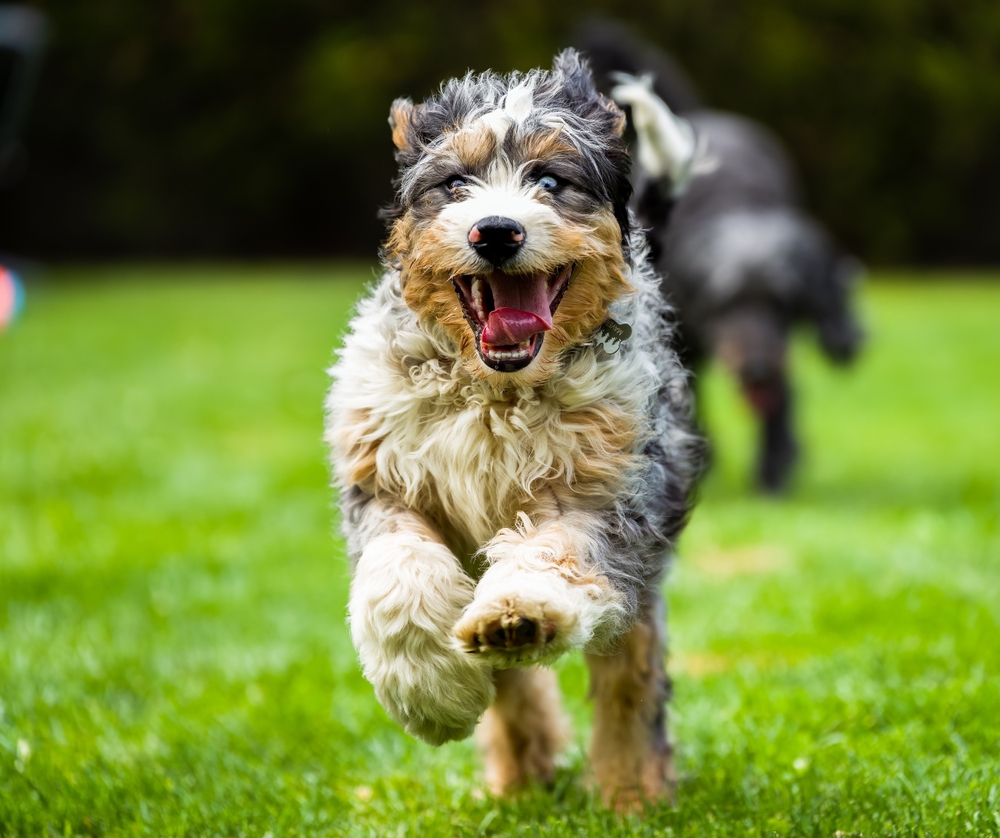 Bernedoodles are smart and easy to train, a trait they inherited from their Poodle parent. However, they are also prone to stubbornness, thanks to their Bernese parent.
They respond best to positive reinforcement and reward-based methods. Make use of treats, praise, and play to train them effectively.
Early socialization and obedience training are also important for a Bernedoodle puppy, especially as they tend to nip. Consistent training to stop this behavior is important.
As for exercise, a Standard Bernedoodle needs at least 60 minutes of daily activity. Less for Micro minis and Minis.
Because of their moderate to high energy, Bernedoodles will benefit from walking, hiking, or playing to burn off energy.
But don't forget their needs for mental stimulation, too. Use training games and challenges to prevent their boredom-related misbehavior.
Diet and Nutrition
Bernedoodles tend to overeat and gain weight easily, which is why it's important to feed them high-quality and balanced food rich in protein, healthy fats, and omega-3 fatty acids.
Some will also benefit from grain-inclusive diets for joint and heart health.
The amount of food they should eat also varies by size.
A Standard-sized Bernedoodle may eat 2 to 3 cups a day, 1 to 2 cups for Minis, and 1/2 to 1 cup for Micro minis. These should be spread and served in 2 to 3 meals within the day, of course.
However, this depends on your individual dog's health and lifestyle. The best way to determine it is by creating a feeding plan with your veterinarian.
RELATED: How Much Homemade Dog Food to Feed Your Dog

Bernedoodle Health and Common Conditions
While Bernedoodles are generally healthy but may inherit some issues from their parent breeds, such as:
- Hip and Elbow Dysplasia (common in large dogs)
- Progressive Retinal Atrophy (PRA)
- Skin Allergies
- Bloat (Gastric Dilatation-Volvulus)
To prevent any of these from progressing or happening, it's important to schedule regular vet visits, maintain a healthy diet and weight, and avoid excessive jumping or high-impact activities in puppies.
Living With a Bernedoodle
While this designer breed is adaptable to different living conditions, it will still thrive best in homes with moderate space or access to a yard.
Active families, first-time dog owners (with commitment to training), and people seeking a loyal, interactive companion will find the perfect match in a Bernedoodle.
They also become deeply attached to their owners, so they might not thrive when left alone for many hours each day.
Crate training and gradual practice with alone time are recommended for them.
Also, their thick coats make them more comfortable in cooler climates than in hot weather.
RELATED: 6 Ways to Tell If You and Your Adopted Dog Are a Perfect Match
FAQs About Bernedoodles
What is the downside of Bernedoodles?
Bernedoodles can be prone to separation anxiety, need lots of mental and physical stimulation, and may inherit health issues from either parent breed.
Some also go through a stubborn puppy phase, which requires consistent training.
Is a Bernedoodle high maintenance?
Yes, especially those with curly or wavy coats.
They require regular brushing to prevent matting, routine grooming every 6–8 weeks, and daily exercise to stay happy and healthy.
RELATED: High-Maintenance Hounds: The 4 Dogs That Require the Most Time, Effort, and Money
Do Bernedoodles like water?
Many Bernedoodles enjoy water, thanks to their Poodle genes.
However, not all of them are natural swimmers, so it depends on the individual dog and early exposure.
RELATED: Dogs in Pools: Why Swimming is Good for Your Pet
Before You Go…
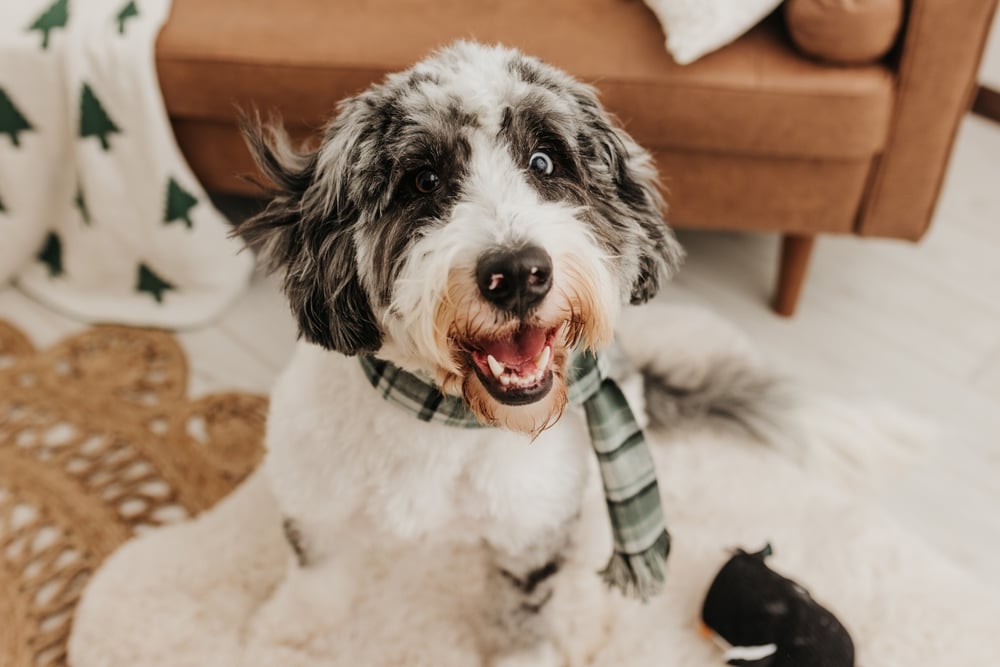
Overall, if you're looking for an affectionate, intelligent, and hypoallergenic dog, the Bernedoodle is the perfect Poodle-mix for you.
But while they're adorable and versatile, they will still need time, training, and care as you would with other dogs.
Do you own a Bernedoodle? We'd love to see their pictures in the comments section!
You can also check out some of our recommended articles below.