
Pet owners are often confused about the grooming of double-coated breeds.
Huskies, Golden Retrievers, Samoyeds, and German Shepherd dogs are just some of the dogs that have a double coat, which consists of a thick coat.
Their fur can be longer around the neck, buttocks, and tail, creating waves on the lateral parts of the limbs.
Double-coated dogs with this type of fur require more frequent brushing and sometimes trimming to remove the undercoat, which is the main reason for shedding.
If you decide shaving your dog is necessary and want to do it yourself, keep a few things in mind.
A Word of Caution
In general, you should NOT shave a double-coated dog.
Some owners in warmer climates assume that shaving their double-coated dog will help him take the heat better. This is incorrect.
This coat is the “protective armor” for the dog, and shaving it will destroy the natural structure and oils of the animal's coat, exposing them to the sun's UV rays in summer or cold in winter.
It also won't grow back the same.

Dogs' hair adapts to the seasons; that's why most consistent hair loss in your pet happens in spring and fall.
In winter, the winter fur becomes thicker and denser, while in summer, the hair bulb shrinks to let the air circulate and cool the dog.
In both cases, the role of the hair is insulation (against the cold in winter and against the heat in summer). Thus, there's rarely any reason to shave a dog.
That said, if you need to shave your dog for some reason, the first step is to have a professional groomer do it.
If you cannot afford a groomer and want to do it yourself, follow safety rules and do it correctly.
Tips for Shaving Double-Coated Dogs
1. Prepare the Dog for Shaving
Begin by getting your dog accustomed to the sound of grooming tools for several days before actually going through with the shaving. If you're using pet clippers, follow these tips on how to keep the dog calm around the buzzing sound of the machine.
Place the clippers near the dog, approach his body without touching him, and tell him reassuring words to keep him calm. Let your pup smell and investigate the device. Only consider shaving when you are sure the animal understands it will not hurt him. Rewards for staying calm will help you reassure the animal.
2. Have the Right Equipment
It’s essential that you have the right equipment for shaving and grooming your dog on hand.
Don't think for a second that shaving with a tool meant for humans is fine, because it's unsuitable for a dog's thick coat.
Higher-quality professional dog clippers are likely to be used for a double-coated dog because of its thick fur.
3. Plan in Advance
Shaving a dog requires planning and preparation. If you are concerned the dog will be restless, plan to have a second person around. If the dog is really anxious, it's better to postpone shaving until the dog is fully accustomed to the shaver and it doesn’t cause anxiety.
4. Be Thorough
Before you start, make sure no small twigs or leaves are stuck in the dog's fur, as they could damage the trimmer.
Brush and comb the dog’s hair with a dense comb to remove tangles and mats, along with anything that could cause the shaver to malfunction.
5. Go Slow
If this is your first time shaving a double-coated dog, start by carefully going through the hair with a trimmer before finishing with scissors.
The most important thing is to stay calm and be gentle, not to alarm the dog, and not to take off too much hair. Know in advance where and how you're going to shave – this is not the time to improvise.
6. Don’t Overdo It
It’s better to do a little rather than too much. Hastiness is never rewarded when you are a beginner at dog grooming. Take your time. At first, try to shave the hair evenly.
You can always go back if you think the dog's hair is still too long and cut some more.
7. Avoid Shaving Elderly Dogs
We all know the saying “It’s just hair, it will always grow back.” Sometimes it will, but other times it won’t. In double-coated dogs, their fur will not grow back the same (which is why it's inadvisable to shave them).
With older dogs in particular, it's even less likely the topcoat will regrow as you hope.
This leaves the animal with only the undercoat, giving it an uneven, scruffy look.
Not only will it look unappealing, but you may end up having to shave it permanently, and from there, you strip them of their natural ability to protect themselves; they no longer have the protection of oils and coat insulation.
RELATED: How to Groom a Dog – All-in-One Guide for Beginners
The 5 Steps to Shaving a Double Coated Dog
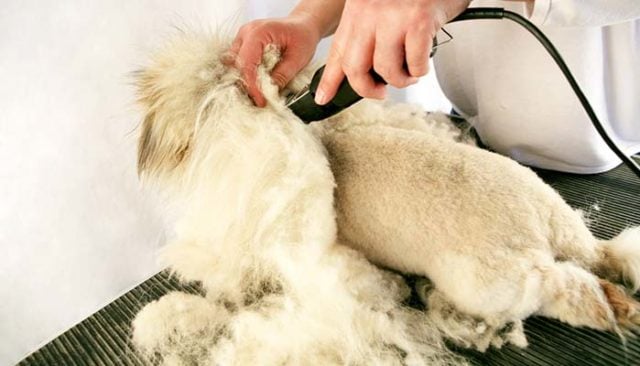
Once you know that your pet is fine around clippers and isn't too anxious, and you've put the dog, the shaving tools, scissors, comb, and everything else you need on a table, you are ready to start.

1. Hold your trimmer firmly in one hand, and start near the neck if the dog is calm. Otherwise, start with the excess hair on the back and top of the head. Don’t forget to stretch the skin on the neck to get to all the not-so-easily-accessible crevices.

2. In the second part, once the neck is shaved, go to the butt and the back, and the tail if you're shaving that too. Always keep one hand on the dog's back or shoulders to keep the animal still.

3. To shave the sides and the belly, it is necessary to start by finding the nipples to avoid them and to avoid hurting the dog. Place the trimmer flat and parallel to the skin, and move it in the direction of the hair.

4. It’s easier to shave the legs when they are extended. Hold them firmly, and be careful not to injure the skin around the joints. Unless you have a specific trimmer extension for detailed work, it's better to finish the hair between the paws with scissors. Hold the skin tight with your fingers, and move the shaver carefully to avoid pinching.

5. For areas where it's necessary to cut very short, such as the throat, the face, the abdomen, and the inside of the thighs in some dogs, it is required to use a specialized narrow extension for the trimmer and to approach cutting the hair very delicately. Often it's best to use just scissors alone.
To help your dog withstand the weather better and stay as comfortable as possible, the first thing is to NOT shave his coat. Next, try to shave the undercoat (dead hair) that hasn't shed yet, even with regular brushing.
You can follow steps that will help with this process, from preparing your pooch for shaving to choosing the right equipment. However, if you doubt your abilities, we recommend seeing a professional groomer with the right techniques who can do the job better than you. A good bath, brushing, and drying can remove a lot of hair, which will make your job easier (and may make shaving unnecessary).
READ NEXT: 8 Tips on Buying and Safely Using Dog Hair Clippers
Pin and share with other dog owners: