


Calm dogs often have calm owners. Energetic dogs have energetic owners.
I don't know if you have noticed, but this seems to be the case for most dogs and pet owners I know of—including me and my own (we're both couch surfers)!
Turns out that's not a coincidence. Science has explanations!
Studies have found that dogs mirror their owners' energy and personality, including their emotions, stress levels, and routines, partly because they have evolved alongside us humans for thousands of years.
In this article, we'll break down these behavioral studies and see how we, dog owners, can leverage them for our day-to-day lives with our pups.
RELATED: Science of Human-Dog Psychology: Are You and Your Dog a Good Match?
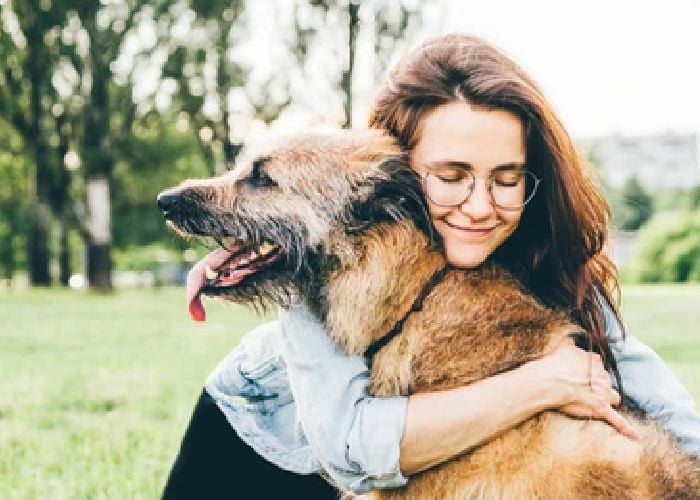
Can Dogs Really Mirror Human Emotions?
Dogs are highly perceptive and social animals. They mainly communicate via their visual and auditory senses.
Over thousands of years of domestication, canines became skilled at reading human behavior.
They watch our tone of voice, posture, routines, and facial expressions. Any changes in our breathing patterns or body tensions can alert our dogs, leading them to mirror our restless or hypervigilant state.
A Dog's Strong Olfactory Senses
Their super senses also help them read our reactions better. A dog's olfactory senses, about 100- to 300-times stronger than humans', allow them to literally smell our stress as our body releases hormones and volatile organic compounds through sweat and breath.
Dogs can detect these chemical shifts with about 90% accuracy, prompting them to respond intuitively with empathy.
RELATED: Dogs Can Smell Many Things – Including Time
Emotional Contagion Between Humans and Dogs
Another reason is the emotional contagion from humans to dogs.
In this study, the researchers concluded that emotional contagion is not only possible within two individuals of the same species (e.g., mice to mice) but also across species (e.g., human to dog), and that the duration of ownership greatly influences it.
This means the longer your bond with your dog is, the more they can and will mirror your energy and personality.
Strong Human-Dog Bonds via Hormones
Oxytocin (the bonding hormone) plays a big role in human-dog attachment, as it is released during positive moments, such as petting or playing. It mimics the biological bond between parents and infants, fostering deep emotional trust and attachment between dogs and humans.
On the other hand, cortisol (the stress hormone) is also found to be synchronized between dogs and their owners, especially after long-term exposure to stress.
“We found that the levels of long-term cortisol in the dog and its owner were synchronized, such that owners with high cortisol levels have dogs with high cortisol levels, while owners with low cortisol levels have dogs with low levels,” says Ann-Sofie Sundman of the Department of Physics, Chemistry and Biology (IFM) at Linköping University and principal author of the study.
RELATED: Sudden Tragedy Reveals The Strong Bond Between Humans and Animals
The Role of Mirror Neurons
Neuroscience also points to mirror neurons, specialized cells that fire in the brain when we perform an action and when we see someone else do it, too.
Scientists say dogs are very likely to possess mirror neurons, though there is no concrete evidence yet. This allows dogs to share and reflect their feelings with their owners. They may become excited, anxious, or relaxed, based on their owners' emotional state.
Different Ways Dogs Mirror Their Owners
Energy Levels and Activity
Calm, generally quiet households will have calm, quiet dogs, and lively households with active owners will have lively, active dogs.
Dogs often settle into the emotional rhythm of the home. They will also get excited when the owners are excited in response to the loud voices and energetic movements.
Our dog's overall disposition usually depends on the household's mood and routine.
Stress, Anxiety, and Overall Mood
You might notice your dog pacing, whining, or hiding when you're feeling anxious and stressed.
That's because dogs mirror the anxiety and stress levels of their owners, sometimes sharing similar patterns of the stress hormone cortisol, especially long-term.
Dogs are highly perceptive of human sadness. When you are feeling down, your dog may mirror your emotions and offer comfort by cuddling or licking.
RELATED: 20 Signs a Dog is Stressed (Based on Science)
Social Behavior
Friendly owners may raise dogs that are more social and confident, especially when they are socialized early in life.
In fact, this could also be vice versa. Studies show that dogs can also help their owners make friends and find social support.
Habits and Daily Routine
Dogs adapt to household schedules and routines over time. They adapt their owners' rhythms and physical routines, such as waking up and sleeping.
Even habits like stretching or yawning can be copied by our dogs, too, as their way of showing bond and empathy.
RELATED: 4 Good Reasons Why Your Dog Needs a Routine
FAQs About Dogs Mirroring Human Behavior
Can dogs copy personality traits?
Dogs don’t copy personality in the human sense, but they can mirror behaviors and emotional cues from their owners.
Research shows dogs are highly attuned to human body language and tone, which can influence how they react.
Over time, they may appear to “match” their owner’s energy levels or habits.
RELATED: What are Dog Personality Traits and Types?
Does dog breed matter?
A dog's breed can influence their overall temperament. Some dogs are more sensitive than others, such as herding and companion breeds, which are more responsive to human emotions.
However, a dog's environment strongly shapes their behavior, too.
Why does a dog act differently around different people?
Dogs adjust their behavior based on past experiences, comfort levels, and cues from each person.
They may be more relaxed with familiar individuals and more cautious or excited around strangers.
Body language, tone of voice, and consistency all affect how a dog responds.
Can training change a dog’s emotional behavior?
Yes, positive reinforcement training can help reshape emotional responses by building confidence and reducing fear or anxiety.
While training doesn’t change a dog’s core temperament, it can improve how they cope with triggers.
In some cases, professional guidance may be needed for severe behavioral issues.
Before You Go…
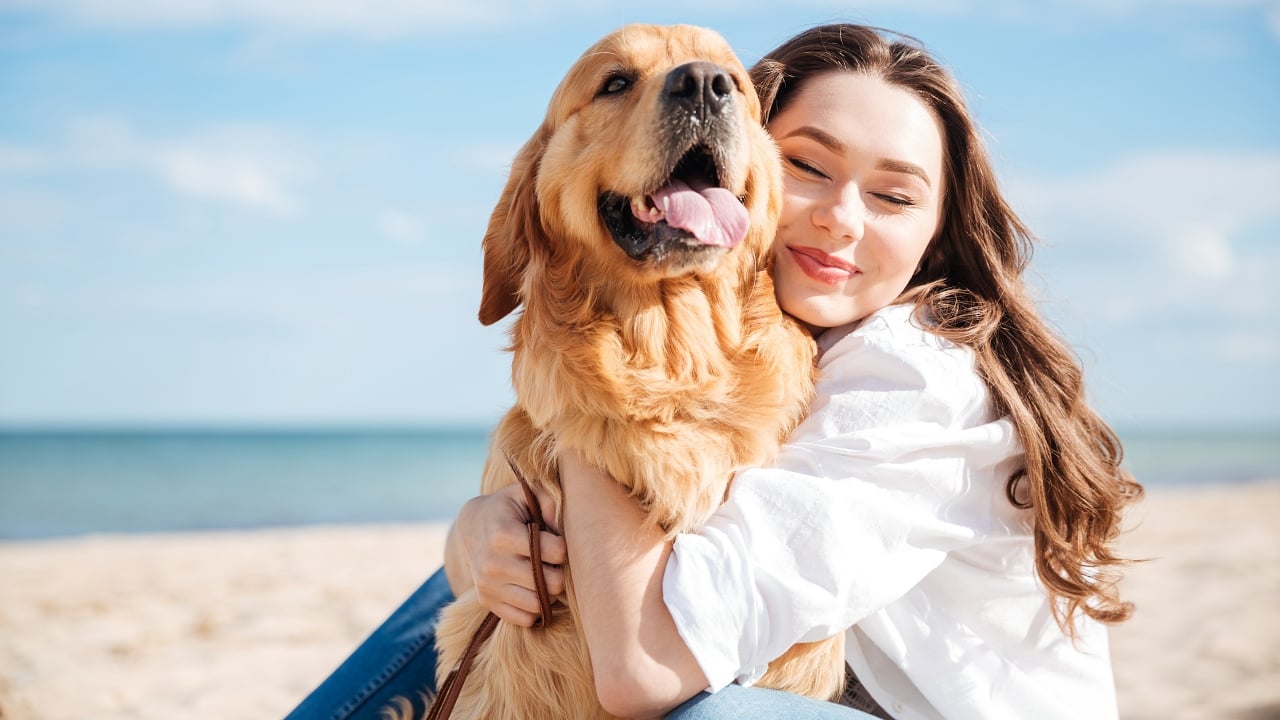
Dogs are highly connected to the humans around them. They are well attuned to our emotions, stress, and routines.
Calm, positive environments will encourage healthier behavior in dogs.
That's why it's important for us, as dog owners, to maintain calm, consistent routines, use gentle training methods, provide physical and mental stimulation, and manage stress at home.
Keeping these in mind will help foster a thriving and harmonious relationship at home with your family and your dog.
Want more science-backed dog behavior insights? Explore our latest guides on canine psychology and training.