
KEY TAKEAWAYS: Start by introducing the bell and letting the dog get familiar with it until they become more confident touching it with their nose or paw. Ring the bell before opening the door for potty breaks, then give them a high-value reward once they finish. Do these consistently and with patience until they get it!
Imagine never having to guess whether your dog needs to go outside again—your dog simply rings a bell to let you know.
Bell training for potty breaks is a simple communication method that many dog owners and trainers swear by during house training.
In this guide, let's talk about how bell training works, the supplies you'll need, and the step-by-step process for teaching your dog to use a bell for potty breaks.
Why Teach Your Dog to Use a Bell for Potty Breaks
Potty bell training works like this: your dog learns to ring or tap a bell to let you know that they need to go outside.
No need to guess or try to decode what the whining means (which, in dogs, could mean they're hungry, in need of cuddles, or just bored).
With this method, not only can you communicate more effectively with your dog about their specific need (a bathroom break), but it can also help reduce indoor accidents and build consistency in your dog's potty routine.
As with other training tricks, potty bell training works through positive reinforcement and, with repetition and enough patience, can become part of your dog's daily routine, whether you're housebreaking a puppy, an adult dog, or a rescue dog who's just learning manners.
It can also help you recognize your senior dog's potty needs, especially incontinence, which is pretty common among elderly dogs.
Step-by-Step on How to Train a Dog to Use a Bell for Potty Breaks
 Step 1: Introduce the Bell
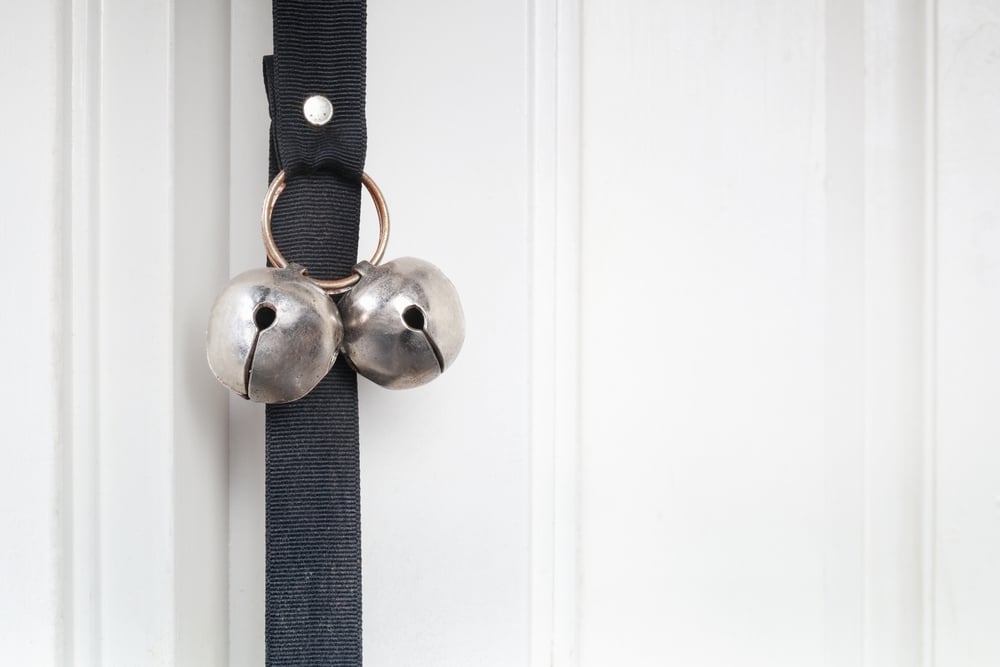
There are different types of bells you can use for this purpose: hanging sleigh or jingle bells, floor bells, wireless bells, or recordable talking buttons.
Whatever you plan to use, it's best to stick with the same one from training onward to avoid confusion.
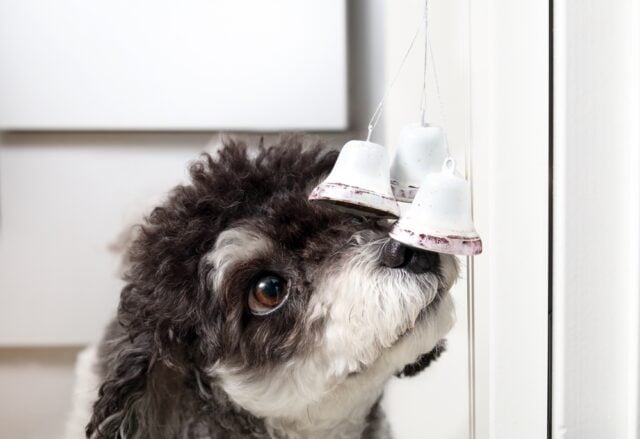
The first step to do is to introduce your dog to the bell. Let your dog sniff, circle, and investigate it closely.
Reward your dog with treats when they interact with the bell. This will help them associate the bell with only good things.
Step 2: Teach Your Dog to Touch the Bell
Once they have shown enough curiosity with the bell, teach them how to use it by showing them!
Hearing the sound for the first time may intimidate noise-sensitive dogs, so make sure to show them it's safe and fun!
Encourage them by smearing a bit of peanut butter or cream cheese on it.
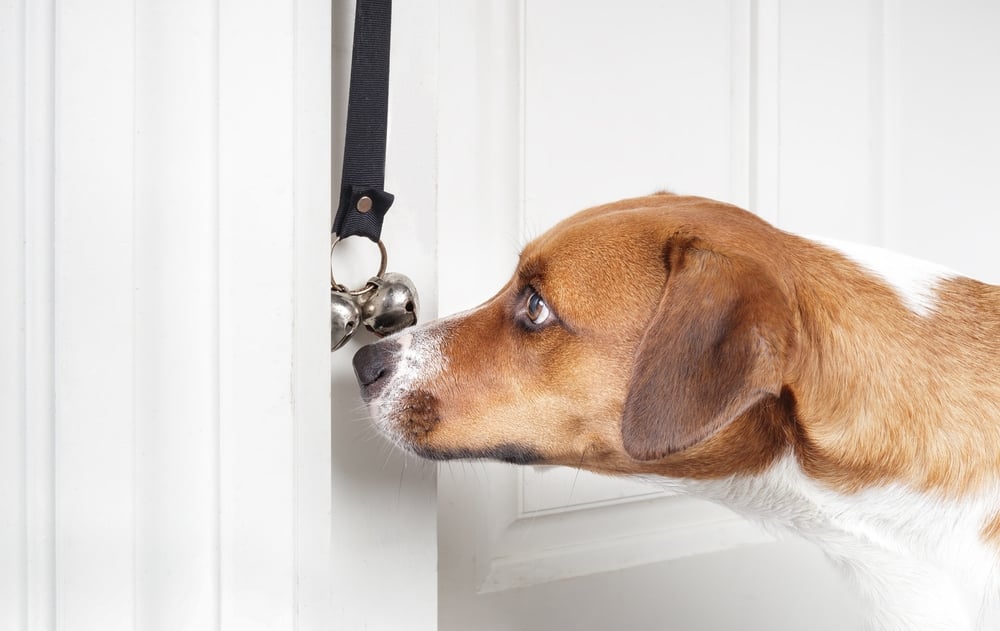
You can let them use either their nose or paw, and don't forget to use treats and praise every time the bell is touched.
Step 3: Ring the Bell Before Every Potty Break
When your dog is used to the sound of the bell, encourage them to touch it before opening the door for potty breaks.
This will work better if you already have an established potty routine, e.g., every morning after waking up or after every dinner.
Ring the bell consistently before opening the door for an outdoor potty trip.
Step 4: Reinforce the Connection
Reinforce further that bell rings = outside potty breaks by eliminating waiting periods.
Ring the bell, then immediately open the door, and reward your dog with a treat and praise as soon as they finish their outdoor business.
Never ring the bell itself and then give treats, because your dog might associate it with snack time instead of potty time.
Step 5: Fade Out Excessive Prompting
After a while, stop prompting them to ring the bell and let them do it on their own until they fully learn how the potty bell works.
More Tips to Make Potty Bell Training Easier
1. Keep Potty Breaks Consistent
Dogs thrive on routines and consistency, and the same goes for potty training.
Consistent potty breaks build predictability and teach dogs bodily awareness, such as knowing when to act based on how their bodies feel.
This, combined with potty bell training, can help prevent frustrating and messy accidents in the house.
Make sure to keep the time and routine consistent, as well as the door you're using for potty bell training.
RELATED: 9 Tips for Potty Training A Dog
2. Use High-Value Rewards
High-value rewards can encourage even the laziest of dogs to participate in training.
These refer to desirable treats that your pet finds more motivating and irresistible than their regular treats, such as small pieces of cooked chicken, cheese, or liver.
It can also be special toys that they really like.
Just make sure to reserve these special treats for training and not give them out on regular days.
3. Be Patient and Positive
Dogs are highly attuned to our emotions. When we feel frustrated, they feel it too.
Be patient and positive, and learn that minor setbacks are normal and can be turned around.
Remember, patience is the secret ingredient in dog training.
4. Avoid These Common Potty Bell Training Mistakes
- Do not be inconsistent. Skipping the bell routine may slow your dog's learning.
- Do not use the bell for playtime. Dogs may ring the bell just to go outside, which defeats the purpose of potty bell training.
- Do not punish accidents. Your dog is only learning, so accidents are normal. Punishing them for it can create confusion or fear, which sets back not only the training but also your relationship.
- Do not wait too long to respond. Continued delays may make your dog stop using the bell if often ignored.
RELATED: How To Housetrain An Adult Dog 101: A Step-By-Step Video Guide
Common Potty Bell Training Problems and How to Troubleshoot Them
My Dog Rings the Bell Constantly
It's possible that your dog associated the bell with playtime instead of potty breaks.
If that's the case, make the bell strictly for business only. Make the potty breaks short and boring, and hold off giving treats unless they actually use the bathroom.
My Dog Is Afraid of the Bell
Gradual desensitization is key when a dog is scared of a trigger, usually a noise.
Let them get used to the bell at their own pace, both its presence and its sound.
If it's been a while and the dog is still scared, you can try muffling the sound by wrapping the bell with a cloth, masking tape, or duct tape.
You can encourage the dog to touch it by smearing a bit of peanut butter or any spreadable treat on it. If they touched it with their nose or paw, give them an excited praise and more treats.
Remove the cloth or tape once your dog is more comfortable with the bell sound.
My Dog Ignores the Bell
If this is the case, make the bell more exciting and enticing for your dog.
Temporarily lure your dog to interact with the bell using a high-value treat, reward the ring, and immediately open the door for a quick, strictly business potty trip in the yard.
My Dog Uses the Bell Sometimes but Not Always
If your dog does not always use the bell, continue using it until they fully associate the sound with going outside to potty.
It's possible they are getting confused by mixed signals, so keep the training going by ringing the bell before every trip and taking your dog straight back inside if they don't potty.
FAQs Related to Dog Potty Training
How often should puppies go outside for potty breaks?
Puppies typically need to go outside every 1–2 hours, depending on their age.
A common guideline is that a puppy can hold their bladder for about one hour per month of age. They should also go out after eating, drinking, playing, and waking up.
RELATED: 10 Reasons You’re Unsuccessful at Potty Training Your Puppy
Can older dogs still learn new tricks?
Definitely! Older dogs can still learn new tricks. Positive reinforcement and consistent practice work at any age.
In fact, many adult dogs have better focus than puppies, so training them may be easier and more straightforward than training the young ones.
RELATED: 12 Reasons Why Senior Dogs Are Better Than Puppies
What are the signs that a dog needs to go potty?
Common signs that your dog needs to go to the bathroom are sniffing the ground, circling, whining, pacing, or heading toward the door (or the usual spot where they relieve themselves).
Some dogs may suddenly stop playing and appear restless. Learning your dog’s specific cues helps prevent accidents and keep potty bell training successful.
Should dogs be crate-trained during potty training?
Yes, crate training can be very helpful during potty training!
Dogs naturally avoid soiling their sleeping area, which encourages bladder control.
The crate should be properly sized and used as a safe space, not a punishment.
How long does potty bell training take?
This depends on the individual dog, but most can learn potty bell training within 1–3 weeks with consistent practice.
Puppies may take longer depending on age and consistency. Clear cues and immediate rewards help speed up the process.
How to Train a Dog to Use a Bell for Potty Breaks: Before You Go…
Learning how to train a dog to use a bell for potty breaks is a fun way to simplify house training your puppy.
While each dog learns at their own pace, consistency, patience, and positive reinforcement can help your dog succeed!
Want to learn more about dog training and housebreaking? Check out more of our articles linked below.