

KEY TAKEAWAYS: To stop a dog fight at home, DO NOT place your hands in front of the fight. Instead, create a distraction using a loud, sudden noise. Disorient your fighting dogs by placing a physical barrier between them, such as a cushion or board, before taking one dog to another room to decompress. Allow both dogs to calm down, inspect for any wounds or injuries, and call the vet if necessary.
One moment, your dogs are peacefully sharing the living room, and the next, they're growling, snapping, or fighting over what seems like nothing.
This is a common multi-dog household problem, and one that I'm sure multi-pet parents can relate to.
Dog fights at home can be pretty scary and dangerous for everyone in the house, but the truth is, there are triggers and warning signs you need to identify to stop them before escalating.
In this guide, we'll discuss how to stop a dog fight at home, including the common causes, warning signs, safe intervention methods, and long-term solutions to dog aggression.
RELATED: TOP #69: How to Handle Aggressive Dogs
Why Does a Dog Fight at Home Happen?
There are multiple reasons dogs fight at home, and this can happen even if they grow up together.
1. Resource Guarding
The most common reason why dogs fight at home is resource guarding.
Dogs are territorial, especially over things they find highly valuable. They can (and will) fight over their food, chews, toys, and sleeping spots.
They can even fight over your attention and the limited space in the house or yard!
RELATED: Possession Aggression in Dogs: The Ultimate Guide
2. Hierarchy and Dominance
A dominant dog may try to establish its dominance over another dog of the same sex, especially unneutered/unspayed pets.
Fighting is how they decide who gets to keep a toy or a certain spot in the house.
3. Fear and Anxiety
This is a common reason dogs lash out: they haven't been properly trained or socialized.
They usually feel trapped, anxious, and threatened by the other dog and may display this through aggression.
4. Pain
Dogs that are injured or in pain easily get agitated and snap at other dogs just to be left alone.
This can also happen even if the dogs got along well in the past.
5. Redirected Aggression
Redirected aggression occurs when a dog becomes agitated or frustrated by a trigger (for example, a squirrel at the window) and redirects that energy toward other dogs in the house.
RELATED: 15 Facts About Fear Aggression in Dogs

Why Dogs That Previously Got Along May Start Fighting
There could also be many reasons why friendly dogs that get along well together suddenly start fighting.
The most common reason is a shift in their social dynamics, often brought about by the dog maturing, new household members, or stressful life changes, such as moving to a new house and changes in routine.
These could affect the hierarchy or order they have already established in the house, e.g., who gets to have a certain spot or toy.
As dogs grow older and more confident, they may also challenge the other dog's dominance in the house, which can lead to fighting.
Health issues can also contribute to dog aggression, as dogs in pain may feel more agitated, as we discussed earlier.
Warning Signs Before a Dog Fight at Home Starts
It's much harder to stop a dog fight once it starts, so it's best to nip it in the bud and intervene right away before the brawl begins.
Some tell-tale signs to watch out for are:
- stiff posture
- hard staring/ unbreakable stare
- raised hackles
- high and rigid tail
- low growling sounds
- snarling or growling with bared teeth
- rapid barking
On the other hand, you should also take action immediately if you see red flags in one dog that you know will agitate the other, such as:
- blocking access
- hovering over resources
- persistent following or bullying
You can calmly step between them to create a physical barrier that breaks eye contact and separates them, then redirect one dog to another room.
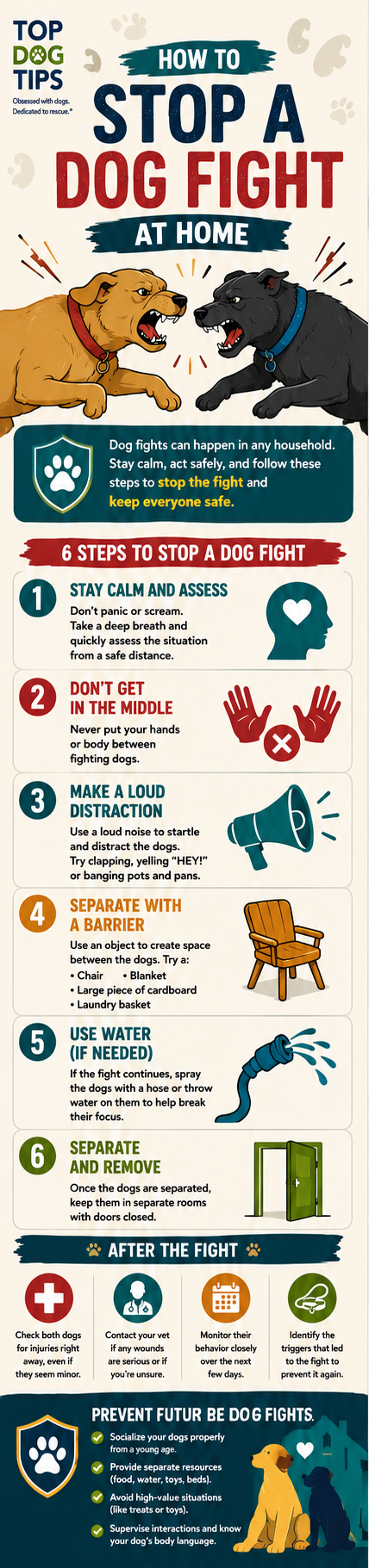
REMEMBER: You CANNOT intervene once the fight breaks out. DO NOT place your hand between fighting dogs, as it can put you in serious harm.
How to Stop a Dog Fight at Home Safely
1. What NOT to Do During a Dog Fight
Let's begin with safety reminders about what you MUST NOT do during a dog fight.
- Don't grab collars
- Don't scream or yell directly into dogs' faces
- Don't physically step between them
- Don't pick up the smaller dog
During fights, dogs are in high “fight drive” and may not properly process who they're biting, regardless of how sweet and attached they are to you. This can put you or anyone trying to break up the fight at serious risk of severe bites.
Grabbing their collars or picking up the other dog may redirect their aggression towards you, and screaming may also just agitate them more.
More things owners should NEVER do are:
- Punishing growling. Remember, growling is communication! They're only trying to say or signal something.
- Allowing dogs to “work it out.”
- Ignoring the early warning signs
- Leaving high-value resources (toys, treats, food) unsupervised between your dogs
- Inconsistent household rules and routines
2. Create a Distraction
The best way to immediately distract your fighting dogs is to make a sudden, loud noise from a distance to startle them.
I usually do this by banging pots together. You can also blow a loud whistle or use an air horn to break their hyperfocus.
The sudden environmental interruption will give you enough time to safely separate them.
3. Use Physical Barriers
Grab anything you can to create a barrier between them that will prevent them from going at it again, such as a couch cushion, chairs, or boards, or, in my case, a heavy blanket over their heads.
This helps disorient and distract them from the fight.
4. Separate the Dogs Safely
Once both are well distracted, separate them right away by moving one or each dog to a different room.
Give them enough time to decompress, and make sure to spend time with each of them individually to calm them down.
DO NOT punish them, as negative experiences can increase their fear and aggression. Stay calm yourself, and soothe them with gentle words and touch.
If they're still agitated, you can play calming music in the background or redirect their attention with simple commands, such as “sit” or “stay,” then reward them with treats once they follow.
RELATED: 10 Tips On How to Calm Down a Dog
5. Assess Injuries Immediately Afterward
As you try to soothe each dog, it may also be the perfect time to assess for injuries.
Check for puncture wounds, and watch for limping or crying when you touch certain body parts.
Give them first aid, or, if necessary, contact your veterinarian right away for guidance.

How to Prevent Dog Fights at Home
Even though you have the friendliest and most agreeable dogs in the whole world, there's no guarantee that they won't get into a fight at some point.
To prevent this as much as you can, implement the following:
1. Manage Valuable Resources for Your Dogs
Give each of them their own “valuable resources,” aka food, toys, beds, and places to rest.
Using pet gates or crates to create physical barriers and teach them where their designated places are will help prevent territorial fights. This is where they can play with their toys or chews and eat their treats,
In common areas accessible to both your dogs, remove bones, chews, or toys that might trigger possessive aggression between them.
2. Create Personal Space for Each Dog
If possible, set up separate feeding stations and resting places in different rooms so each has its own personal space.
If not, then this is when individual crates and crate training will come in handy.
We have a separate guide on how you can create a dog corner at home, plus some inspirations to copy in this article: Dog Corner Ideas: 12 Fun & Functional Spaces for Your Pet!
3. Learn Each Dog's Triggers
Each dog has its own triggers, depending on its personality. If your dogs constantly fight at home, it's best to exert more effort in understanding the root cause of the behavior.
If you can (or someone in the household), keep a behavior journal where you track:
- Time of day
- Trigger events
- Location
- Dogs involved
Doing this will help you see the pattern and understand how to avoid the situation by also avoiding or minimizing the triggers.
4. Provide Enough Exercise and Mental Stimulation
Exercise will do a lot of wonderful things for your dogs' physical and mental health, as well as for their relationship with you and each other.
Take them for walks, fetch, and agility games outside to release their pent-up energies.
You can also give them puzzle toys or set up scent-based games and training sessions to redirect their energy toward something more productive.
5. Avoid Favoritism and Competition
Dogs can get possessive, including of their owners, so make sure to give both your attention, fair and square.
If not, your attention will be another thing they'd have to compete and fight over!
Reward both your dogs equally for their calm behavior when you're all together.

When to Seek Professional Help
If the situation is escalating, meaning it's becoming repeated and more frequent, and there have been serious injuries and even aggression toward people, then it's time to seek professional help.
RELATED: Dog Behaviorist vs Dog Trainer: Which One Is Right for You?
Dog Fight at Home FAQs
1. Can neutering or spaying reduce aggression in dogs?
Spaying or neutering may reduce hormone-driven behaviors like roaming, mounting, or some forms of same-sex aggression.
However, it does not automatically eliminate all aggression, especially if the behavior is fear-based or learned.
Training and behavior modification are often still needed.
2. How much exercise does a dog need to stay mentally balanced?
Most adult dogs need at least 30–120 minutes of physical activity daily, depending on breed, age, and energy level.
Mental stimulation, such as training, scent games, or puzzle toys, is just as important as physical exercise.
A well-exercised dog is generally calmer and less likely to develop problem behaviors.
3. How do I know if my dog is playing or becoming aggressive?
Play behavior usually includes loose, bouncy movements, play bows, and role reversals.
Aggression often shows stiff body posture, prolonged staring, growling with tension, snapping, or escalating intensity.
If interactions become rigid or one dog tries to escape, it’s time to intervene.
RELATED: Dog Isn't Playful Anymore: What Could Be the Problem?
How to Stop a Dog Fight at Home: Before You Go…
Really, the best way to stop a dog fight at home is to understand the triggers and manage the situation before it escalates.
Most household conflicts among pets can be addressed with consistency, structure, and proactive management.
Remember that having a multi-pet household is a bigger responsibility, so consider this first before getting another dog.
Want to learn more about aggression, multi-pet households, and dog fights? Check out our recommended articles below!