

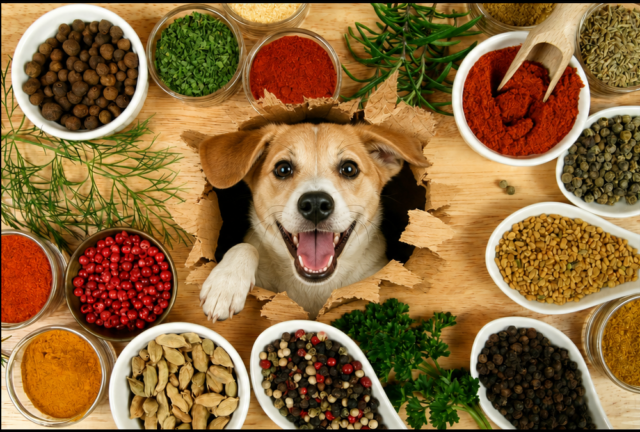
KEY TAKEAWAYS: When considering what seasonings dogs can have, plain and minimal is usually the safest approach. You can use basil, parsley, rosemary, thyme, ginger, turmeric, cinnamon, dill, cilantro or coriander, peppermint, and sage.
However, avoid garlic, onion, nutmeg, excessive salt, spicy ingredients, and complex seasoning blends.
Our dogs can't eat plain chicken (or other dog-safe protein), rice, and vegetables all the time, right? Not only are those boring, but they also don't provide enough variety of nutrients that dogs need to stay healthy!
Luckily, adding flavor from your spice cabinet isn't always harmful to dogs! But what seasonings can dogs have?
Yes, you can give certain culinary herbs and spices in small amounts, which can add pizzazz to an otherwise boring meal and provide health benefits when given in the right amounts.
In this guide, we'll cover 11 seasonings dogs can have + 6 to avoid at all costs.
11 Seasonings Dogs Can Have in Small Amounts
1. Basil
Dogs can eat basil, especially because it is nutrient-rich with vitamins A, K, and magnesium. It also acts as an antioxidant and can even help freshen a dog's breath with just a small leaf.
Basil is also an effective mosquito and tick repellent for dogs!
Both dried and fresh basil are safe for dogs; however, fresh basil is easier to portion because dried basil is more concentrated.
Too much can cause digestive upset, vomiting, gas, or diarrhea.
Also, don't feed processed foods that contain basil, like pesto or basil sauces, as they often contain toxic ingredients such as garlic, high amounts of salt, and oils that may cause pancreatitis.
Serving idea: Sprinkle a small amount of finely chopped fresh basil over plain cooked food.
2. Parsley
 Only one variety of parsley dogs can safely eat: curly parsley.
Avoid flat-leaf (Italian) parsley, spring parsley, and other wild varieties, as they contain high levels of furanocoumarins that can cause severe photosensitivity and skin inflammation when exposed to the sun.
In moderation, parsley can help freshen a dog's breath and support their immune system.
As a general rule, you can give about 1/2 teaspoon of fresh or 1/4 teaspoon of dried parsley per 10 pounds of body weight to your dog's homemade meal.
Just be careful not to give it to pregnant dogs, as parsley can stimulate uterine contractions, or to dogs with kidney issues.
Also, remember that not every plant commonly called “parsley” is interchangeable, so when in doubt, just stick to the curly variety!
RECIPE: Peanut Butter and Parsley Dog Treats
3. Rosemary
The American Society for the Prevention of Cruelty to Animals (ASPCA) lists rosemary as non-toxic to dogs, cats, and even horses.
This herb has anti-inflammatory and antioxidant properties and can support digestive health when given in the right (small) amounts.
Rosemary is also beneficial for a dog's coat and breath, and when mixed in dog food, can act as a natural preservative!
RECIPE: Pumpkin Rosemary Dog Treats
Fresh rosemary should be minced or chopped very fine. The leaves are fibrous and hard to chew, and can cause stomach issues when eaten as is.
Dried rosemary, on the other hand, is safe in tiny pinches. Watch the amount, as it is very concentrated and can also upset the stomach if too much is given.
4. Thyme
Thyme is another herb that can benefit a dog's digestive health. It can relieve gas and bloating and help ease symptoms for dogs with irritable bowel syndrome (IBS).
Its thymol content has antimicrobial & antifungal properties that help fight bacteria and yeast, making it ideal for soothing itchy skin and fighting bad breath.
The ASPCA also lists common garden thyme (Thymus vulgaris) as non-toxic to dogs; however, avoid one type of thyme: the Spanish variant.
Spanish thyme contains essential oils that can irritate your dog's skin or cause illness, and is considered toxic to dogs, cats, and even horses.
Looking for recipe ideas with thyme? This tuna and shrimp dog food recipe includes a quarter teaspoon, the perfect amount to reap all its benefits for your pup!
 5. Ginger

Ginger often has the same effects on dogs as it does on humans: it can help ease nausea and motion sickness, mild bloating and gas, and offer mild support for arthritis or stiff joints.
But if your dog is taking any medications or has certain health conditions, like a bleeding disorder, liver or kidney disease, or is pregnant or scheduled for surgery, consult your veterinarian first before giving them ginger.
Also, avoid treats that contain ginger, like gingerbread or candied ginger, because they often include high amounts of sugar, nutmeg, and other ingredients that can harm dogs.
RELATED: Is Ginger Good for Dogs?
6. Turmeric
Turmeric is generally safe and beneficial for dogs in small doses, offering natural anti-inflammatory, antioxidant, and joint-support properties because of its active compound called curcumin.
It's also considered one of the safest natural dog pain remedies you can give at home. Because of this, it is often included as an ingredient in most pet supplements and even food.
As a general rule, you can give about 1/8 to 1/4 teaspoon per 10 pounds of body weight daily, split across meals.
Consult your veterinarian first, as turmeric can interact with other medications or health conditions.
RECIPE: Pumpkin Turmeric Dog Treats for Arthritis
7. Cinnamon
Cinnamon is generally not considered toxic to dogs in small amounts, but that doesn't mean dogs should consume large quantities.
The bigger problem in cinnamon-flavored treats isn't the spice itself, but rather the high sugar content and other harmful ingredients they may contain.
But when combined with other dog-safe ingredients, it can be a wonderful flavoring for dog treats (like our Cinnamon-Banana recipe!).
8. Dill
Dill has a host of wonderful benefits for your dog. It can freshen their breath, aid in digestion, and provide antioxidants. Dill also provides small amounts of vitamins A and C, calcium, iron, and potassium.
DO NOT give your dog dill pickles, because these contain high amounts of sodium and potentially unsafe additional ingredients.
If you're using a commercial dill seasoning, check the ingredient list to make sure it's safe for your dog!
Also, if your dog is pregnant, do not give them dill because it can stimulate uterine contractions.
RELATED: The 3 Best Herbs to Naturally Treat Your Dog's Upset Stomach
9. Cilantro/ Coriander
Cilantro can be added to your dog's meal when chopped finely and given in small amounts. Not only does it add flavor, but it can also help freshen breath, support digestion, and provide vitamins A, C, and K, and minerals like magnesium and calcium.
Like all herbs and spices, give cilantro only in small amounts to avoid upsetting your dog's stomach.
Also, do not give them any cilantro-containing human dishes, like salsa or guacamole. Those are definitely not dog-safe!
10. Peppermint
Now be careful with this one. Plain, fresh, or dried peppermint leaves are generally safe for dogs in very small amounts, but human peppermint products, like essential oils, are dangerous or toxic to our pets.
Dog treats and chews that contain peppermint can actually help freshen their breath and aid in digestion.
However, avoid peppermint candies and gum, chocolate mint products, and other mint types, as they contain large amounts of sugar and potentially xylitol, which is a huge no-no for dogs!

11. Sage
Sage is another herb on the ASPCA's non-toxic list for dogs. It is rich in vitamins A, E, and K, plus calcium, magnesium, and antioxidants.
Sage also has anti-inflammatory and antimicrobial properties that help soothe joint discomfort, seasonal allergy flare-ups, and even neutralize oral bacteria.
IMPORTANT NOTE: A seasoning's safety depends on the ingredient, quantity, your dog's size and health, and what else is in the mixture.
6 Seasonings Dogs Should NOT Have
While the herbs and seasonings above are safe, DO NOT use seasoning blends because they can contain unsuitable ingredients, like the ones below:
1. Garlic and Garlic Powder
Anything belonging to the Allium family can be harmful to dogs, including garlic and, therefore, garlic powder, garlic salt, and other seasoning blends containing garlic.
Garlic contains thiosulfate and sulfur that damage red blood cells and may cause hemolytic anemia.

2. Onion and Onion Powder
Onion is also part of the Allium family, including shallots, leeks, and chives, and is toxic to dogs in all forms (raw, cooked, dried, and powdered).
It can also cause hemolytic anemia, and with overtime buildup, may cause dangerous poisoning.
3. Nutmeg
While cinnamon is safe for dogs in small amounts, never feed them nutmeg, even in small, intentional amounts.
Nutmeg contains myristicin, which can act as a narcotic and hallucinogen in canines.
Even as little as 1 teaspoon can trigger poisoning symptoms in dogs and may cause mild stomach upset, but can be especially risky for small dogs or puppies.
4. Excessive Salt
Sodium is an essential nutrient, but dogs on a complete and balanced diet already get the sodium they need; they don't need excessive amounts or added flavor in their food.
 5. Chili Powder and Hot Peppers
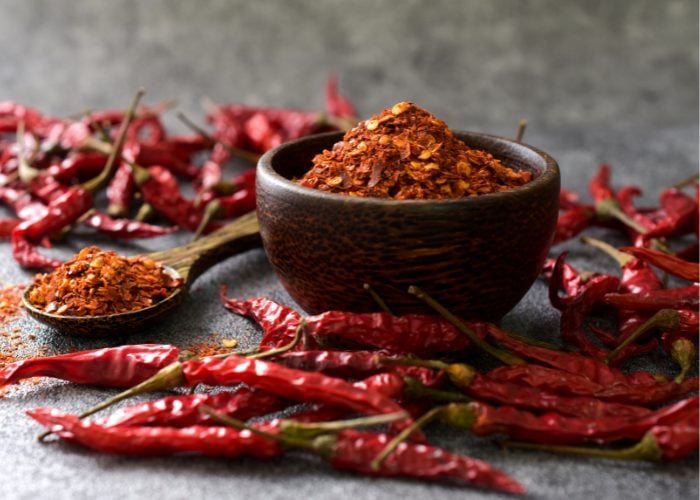
While dogs don't necessarily taste spicy, they can feel the effects of capsaicin, the tingly and burning sensation. This can also cause gastrointestinal irritation and discomfort.
Avoid chili powder, cayenne pepper, hot pepper flakes, hot sauces, and spicy seasoning mixtures.
RELATED: Can Dogs Eat Spicy Food?
6. Seasoning Blends
Any seasoning blends (taco, chili, steak seasonings, barbecue rubs, soup mixes, etc.) can combine high sodium with onion powder, garlic powder, spices, sweeteners, and other ingredients that make them unsuitable for dogs.
How to Safely Season Homemade Dog Food
Start by consulting your veterinarian before regularly adding herbs or supplements to your dog's diet, especially if your dog has a medical condition or takes medication.
- Start with nutritionally appropriate food. Seasoning doesn't make an unbalanced homemade diet complete.
- Choose one plain herb or spice. Avoid complex seasoning blends.
- Check the ingredient label. Look specifically for onion, garlic, excess sodium, and sweeteners such as xylitol (and avoid them).
- Use very small amounts. Dogs don't need heavily seasoned meals.
- Introduce one new ingredient at a time. This makes adverse reactions easier to identify.
- Watch your dog afterward. Look for vomiting, diarrhea, unusual behavior, or other symptoms.
- Ask your veterinarian about regular use. This is especially important for dogs with medical conditions or those taking medication.
Also, just because a dog can have a particular herb doesn't mean every extract, supplement, or essential oil made from that plant is safe. Double-check and ask experts before giving your dog anything new.
What to Do If Your Dog Eats an Unsafe Seasoning
In case your dog accidentally eats a copious amount of unsafe seasoning in meals or anywhere, make sure to:
- Identify exactly what the dog ate.
- Save the package or ingredient label.
- Estimate how much was consumed.
- Note the dog's approximate weight.
- Contact a veterinarian or animal poison-control service promptly if the ingredient may be toxic.
- Don't induce vomiting unless a veterinary professional specifically instructs you to.
The risk depends heavily on the ingredient, dose, dog's size, and individual health, so don't wait for severe symptoms before contacting the experts when a potentially toxic amount has been consumed.

FAQs About Seasonings & Dogs
Do dogs actually need seasoning on their food?
The truth is, dogs don't need herbs or spices to make a nutritionally complete commercial diet healthier.
However, they can make meals and treats more interesting!
Dog-safe herbs and spices may be used primarily for:
- Flavoring homemade treats
- Adding variety to veterinarian-approved homemade diets
- Specific culinary purposes
These seasonings for dogs shouldn't replace appropriate nutrition or veterinary treatment.
Can dogs eat seasoned chicken?
Yes, but only if seasoned with dog-safe seasonings and only in small amounts.
Plain, boneless cooked chicken is still the best option for dogs (and the easiest to prep!)
Can dogs have salt and pepper?
No, dogs should not have salt and pepper. While small, accidental licks of these seasonings are usually not fatal, intentionally adding them to a dog's food is unhealthy.
Salt adds unnecessary sodium, which, in the worst case, can lead to salt toxicosis or poisoning.
Black or white pepper, on the other hand, contains piperine, which has no nutritional value for dogs and can irritate their digestive system.
What can I add to dog food to make it taste better?
Dogs tend to eat with their noses first, so changing or adding a few ingredients can create enough variety for them!
Some dog-safe food toppers include warm water or low-sodium bone broth, eggs, plain or Greek yogurt, kefir, canned fish (unsalted and packed in water), plain pumpkin puree, or nutritional yeast (as a cheese substitute!).
Before You Go… Remember to Keep the Seasoning Simple!
When choosing seasonings, plain and minimal is usually the safest approach.
You can add certain culinary herbs and spices in small amounts, but avoid garlic, onion, nutmeg, excessive salt, spicy ingredients, and complex seasoning blends.
Seasoning shouldn't fix a nutritionally incomplete homemade diet or replace veterinary care.
When introducing a new ingredient regularly, especially for a dog with health problems or who is taking medication, always check with your veterinarian first.
Want to read more about dog nutrition tips? Check out more of our recommended articles below!