
Among the many accessories and expenditures our pets require, some parts of grooming a dog may sometimes fall by the wayside. Yet, while not as important as routine vet visits, enough food, monthly preventatives, nail trims, dental care, and other grooming tasks (such as haircuts) should still be part of your pet’s yearly budget.
Several locally and corporately owned businesses in your town or city likely offer pet grooming services; a traditional shampoo with attention to the ears, toenails, teeth, and anal glands typically costs around $50 for most dogs. Some households, though, may not be able to afford to pay someone else to cut hair of their pet, which is when you'll need to learn how to give a dog a haircut from the comfort of your home.
Cutting the hair of extremely nervous dogs (or nervous pet owners) may even be the most ideal option. Keeping your furry friend in a familiar place while you give them a stylish haircut with your own trusted hands makes for a more comfortable experience.
ALSO READ: How To Use Dog Clippers to Trim or Cut Dog’s Hair
Why Regular Hair Trims Are Important
A soft and clean pet makes for a more pleasing cuddle session on the couch. More importantly, a serious lack of grooming and trimming can lead to issues for canines, such as matted hair, skin infections, or pest infestations.
There are many examples of that, but most commonly, it's the abandoned or neglected animals that are surrendered or rescued from unfortunate situations every day, and many of them are discovered to be in such a dire need of grooming that drastic measures must be taken, including amputation (as bulky masses of matted hair can cut off circulation and leave a limb entirely useless).
While it’s unlikely your cared-for pet will ever have to endure a situation as the one described, it hopefully expresses the importance of regularly attending to your pet’s coat.
Haircuts – Not for Every Dog
 Before you pick up shears to give your dog a haircut, your pet needs to meet some important qualifications. Avoid cutting your dog’s hair until you learn more about their breed and their coat, especially if your pet’s coat or appearance could be described with any of the following adjectives:
- Shaggy
- Heavy
- Fluffy
- Long
- Thick neck
- Extra-skin
If one or more of the above descriptors describe your canine counterpart, your pet likely has a double coat. You may be most familiar with double-coated dogs in breeds like Huskies, Akitas, and Chow Chows; however, smaller breeds and even breeds with sleek, “unfluffy” fur also have double coats, such as Pomeranians and Beagles.
Never shave double-coated breeds, even in hot, humid climates. Their specially designed coats are essential for regulating body temperature, whether it's hot or cold. Shaving off these self-sufficient coats can cause irreparable damage unless the pet has a serious case of mange or another skin ailment, in which case you should consult a veterinarian for the best steps. What’s most important for double-coated dogs is regular brushing; this helps prevent matting, which can cause overheating and create an inviting home for common pests.
If you’re unsure if your pet has a double coat, consult your veterinarian or visit a local dog grooming business. If your pet was adopted or rescued and you’re unsure of their pedigree, even if a dog isn’t a purebred Collie, it’s still likely the mutt has a double coat. That said, light trimming is unlikely to cause damage and may even be recommended, especially around the paws and hindquarters.
RELATED: How to Help Your Dog Get Used to Pet Clippers

Training Your Dog to Enjoy (or Tolerate) Haircuts
The easiest way to train your pooch to enjoy, or at least tolerate, haircuts and other grooming routines is to start young. The first 12 months of a puppy’s life are highly impressionable, and if not properly socialized, behavioral issues, including aggression and anxiety, can develop later in life. If you can introduce a grooming routine while your pet is still young, do so.
The key to raising a dog who can tolerate being touched in sensitive areas is to target those sensitive areas, which for most canines are their paws, ears, and back legs. Routinely play with their paws (gently) and check their ears; you can gingerly run your hand up their back legs. The puppy will slowly become more familiar, and therefore more comfortable, with these sensations, which will also make visits to the vet for yearly examinations much less scary for the dog and much less difficult for the veterinary technician.
However, if you aren’t in the possession of a puppy, fear not – any dog at any age is trainable. In fact, some argue older dogs are more trainable because they lack the hyper, inattentive nature of a young, playful puppy.
Because haircuts involve sharp and sometimes noisy (clippers, blow-dryers, etc.) tools, your pet may not be keen to sit still during their salon treatment. If so, stop what you’re doing immediately. You could easily give your dog an unwanted complex that involves running and hiding in any space they can squeeze into as soon as they see a pair of scissors or a brush.
Here are some tips:
1. Take it slow
If your dog fears strangers, you likely wouldn’t leave them alone in a crowded plaza. We don’t throw animals into situations to “break” their fear; we ease them into it. If your dog hasn’t had a haircut at home with you before, assume they may be fearful of noisy pet hair clippers or big, shiny scissors, even if you don’t know this about them yet.
“Introduce” your pet to your grooming utensils by calmly setting them on the floor in front of your dog. When their curiosity is piqued and they approach to take a tentative sniff or lick, praise them and give treats for their bravery. You may choose to do this several times before actually using the utensils. You’ll know you’ve been successful when your pet wags their tail at the very sight of a pair of scissors.
2. Be gentle
It’s easy to become frustrated when our dogs are resistant or not obeying. However, acting on your frustration is likely to only make them more rigid and less permissive. Instead, be as gentle as you can. You may exhibit this by petting them in long, slow strokes, encouraging them in a soft, happy voice, and lifting up their paws and working around their bodies with ease and respect.
3. Give lots of treats
Delicious morsels of shredded chicken or bits of turkey bacon will likely motivate your scissor-shy pooch. Save these valued treats for grooming sessions only, so they have something to look forward to. You can also plan your schedule to brush and trim before you feed them so they're more interested in the treats and less focused on the fact that you’re trimming around their tail.
4. Reward good behavior
You can do more than give yummy treats, especially for a dog who is less food-motivated. After a successful grooming session, spend time with your pup and give them lots of attention. A long game of fetch in the backyard, an extra-long belly rub, or a walk to their favorite park are just a few ways to reward your furry friend.
5. Enlist help
Not surprisingly, giving a dog a haircut is much easier when you ask a roommate, friend, spouse, or family member for help. Just make sure it’s someone your pet feels comfortable with, since they’re likely already on guard.
RELATED: How to Trim Your Dog’s Face Hair with Scissors

Trimming Techniques: Which One Is Right?
There are two ways to approach a dog haircut: clippers or scissors. You can (and depending on the breed/coat, probably need) use a combination of both for the best results. Here are a few things to keep in mind.
Clippers
Given your pet isn’t double-coated, clippers are probably the best option for haircuts. While you can use human-grade clippers on your dog, you may find they aren't as forgiving as clippers made for canines, especially if you use professional-grade clippers to cut your dog's hair.
When using clippers, adjust the length based on your pet's current coat length and your desired length. Run the clippers in the same direction as the hair follicles grow, not against. Be sure to brush your dog before you start the haircut to remove knots or tangles.
Scissors
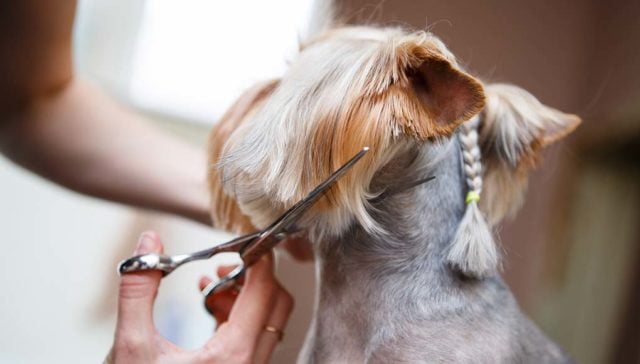
If your pet is double-coated and/or scared of the noise clippers make, then silent clippers that make no noise, which are essentially scissors or shears, may be ideal for you. The goal with scissors is not to take off lots of length, but to clean up or “tidy” certain areas.
This may be especially important for a breed with a shaggy coat, which can create unruly, wispy hairs around the paws or fur hanging down in the face, making it hard to see. Use the length of the blade to get the desired length, then you may use the tips of the shears, using quick, short snips, to give the cut a less abrupt look, effectively “blending” it into their coat.
When it comes to scissors, consider these varieties:
Thinning shears
This tool is designed to protect its user from obvious mistakes, like a chunk that's too big or a cut that's too large. The unique teeth on thinning shears don’t cut in a straight line like the blade of a regular pair of scissors. These are great for any fur length but will require several snips to get the desired look. They’re also helpful when breaking up matted coats.
Curved scissors
These will help the doggie stylist, in this case you, to get in and around the curved, elegant body of your dog. These are particularly helpful around a dog's hindquarters, head, and face.
Short-bladed scissors
Professionals often utilize long-bladed scissors, but the shorter the blades, the more forgiving the cut. Five- to seven-inch scissors may be best, at least when you're starting out.

Problem Areas to Pay Attention to
A few areas require extra care when trimming your dog's hair: paws, ears, and tail.
Paws
Miniature scissors (designed for sewing or beard trimming) may be best for this venture, especially if you own a puppy or small dog. Petite shears let you clip delicately within and around the many small crevices of a paw. Paws, especially on long-coated canines, are an important part of your grooming routine.
If they develop, furry masses around the toes are more likely to pick up foreign items, cause discomfort, and even lead to infection. During frigid winters, keeping paws trimmed helps your pet stay warm (dogs regulate some of their body temperature through their paw pads) by keeping sludge, snow, ice, and sleet from packing into overgrown paw fur.
Eyes
Wipe around the eyes with a warm, soothing rag, laying down any hair you don’t want to get in the way of your scissors. Using a small comb to help you cut around this sensitive area is extremely helpful and will keep you feeling confident and your dog more relaxed.
Comb the hair out and hold it with the tips of one hand, then trim the combed-out hairs with your other hand. Keeping your dog’s vision clear of extraneous strands will keep them safer and happier; although they may not enjoy the haircut, they’ll thank you later with lots of licks.
Tail
 Keeping a dog's hind end well-trimmed and groomed ensures there are no lingering scents or unseemly sights. Additionally, it’ll keep your pet cleaner and less prone to bacterial infections. A clean bottom is less irritated and thus less likely to be scooted across your new rug.
Depending on the fluffiness of your dog, you may be able to use clippers to get the bulk of the fur around this area and then use curved scissors or trimming shears to get a closer, neater haircut.
READ NEXT: How to Make Bathing a Dog Easier (And Some Unique Tools You Can Use)