

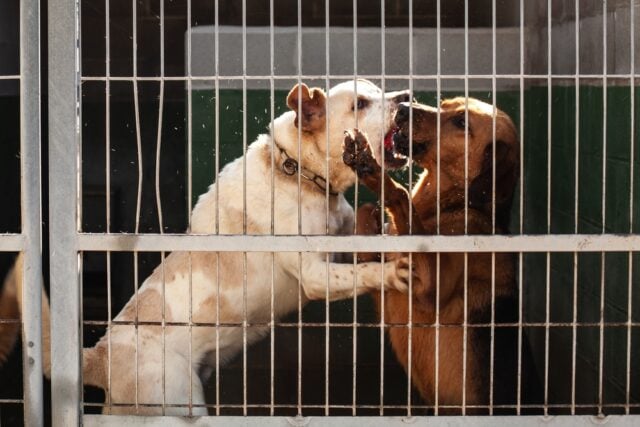
KEY TAKEAWAYS: The crate-and-rotate method is a management strategy dog owners can use when dogs cannot be safely together due to aggression, resource guarding, or severe conflict. It can be done for dogs who don't get along by having them take turns being loose while the other is confined safely in a crate, a separate room, or another secure area for a specific period of time.
What if two dogs in the same household simply can't get along?
Living in the same house with dogs who just can't get along is definitely not easy. Constant fighting over toys, food, and other resources can be dangerous for everyone—your dogs and family members included!
So, what should you do? Is rehoming one dog the answer?
Not always.
You can try the crate-and-rotate method, a management strategy dog owners can use when dogs cannot be safely together for various reasons, including aggression, resource guarding, or severe conflict.
The goal here is safety, not punishment. This distinction is important for success!
RELATED: 8 Tips on How to Deal With Resource Guarding in Dogs

What Is Crate and Rotate?
In the crate-and-rotate strategy, dogs who don't get along take turns being loose while the other is safely confined in a crate, a separate room, or another secure area for a set period.
Dog owners use it:
- To prevent fights and injuries
- To reduce stress between incompatible dogs
- To allow multiple dogs to remain safely in the same household
When Is Crate and Rotate Necessary?
Dogs With a History of Fighting
This is especially true for rescue dogs with negative experiences, which can make them extra wary and aggressive.
The crate-and-rotate technique can help establish a predictable routine, reduce stress, and teach them to be independent and rest calmly on their own.
Severe Resource Guarding
Dogs with severe resource guarding may benefit from the crate-and-rotate method, which prevents accidental fights and reduces stress by keeping the dog away from items they want to protect.
This management system keeps people and other pets safe while you work on their behavior training.
Introducing a New Dog to the Household
The crate-and-rotate method also helps introduce a new dog safely by preventing fights, reducing emotional stress, and allowing each animal to decompress at their own pace.
This is especially true if the existing dog in the house is territorial over the house and your family members.
Dogs That Cannot Safely Be Left Together
When supervision alone isn't enough, you can establish a crate-and-rotate routine so incompatible dogs can take turns having supervised freedom while the other is safely secured.
This prevents fights, reduces stress, and ensures everyone gets fair, undivided attention without forced contact.
RELATED: How to Make Dogs Get Along with Each Other
How the Crate and Rotate System Works
1. Create Separate Safe Areas
Your safe area in the house could be anywhere — in the backyard or a separate room with closed doors. It could also be a crate setup, a corner with a baby gate, and/ or an exercise pen.
What matters is that the dogs won't have access to each other's personal space.
RELATED: Dog Corner Ideas: 12 Fun & Functional Spaces for Your Pet!
2. Establish a Rotation Schedule
You can alternate each pet's crate time every 2 to 3 hours.
While Dog A gets out-of-crate time, exercise, and attention, Dog B rests safely in their crate or separate room.
The roles switch each time block to ensure fairness and safety, and to make sure each dog gets equal attention, exercise, and enrichment.
When you use a crate and rotate management system for too long or leave dogs confined for excessive stretches without adequate breaks, it takes a heavy toll on the dogs' mental and physical health, while turning your home life into an exhausting routine, so make sure to limit crate time to only a couple of hours.
3. Use Visual Reminders
This is especially helpful if other people in the house are caring for both dogs.
A visual reminder could be as simple as a literal schedule posted on a whiteboard or a door sign, helping you or anyone keep track of time and avoid mistakes.
4. Double-Check Before Opening Doors
You must double-check before opening the doors to prevent accidental dog-to-dog contact, which can cause severe fights, injuries, or escapes.
Because this management routine relies entirely on physical separation, a single human lapse in verifying who is allowed to be loose can bypass your safety layers!

Tips for Successful Crate and Rotate
1. Make the Crate a Positive Place
Remember, a crate-and-rotate routine isn't a punishment, so set up the crate or isolated space in a way that makes your dog feel relaxed and enjoy being there.
Provide comfortable bedding, their favorite chew toys or treat puzzles, plenty of water, and, if needed, relaxing music to keep them calm.
RELATED: How to Set Up a Dog Feeding Station + 5 Creative Ideas!
2. Give Each Dog Daily Exercise
Take your dogs out one by one for walks, play, or training away from the others, while keeping the other or the rest of the pack safely secured in their crates or separate rooms during each individual session.
This is a great opportunity to provide the physical activity and mental enrichment they need to prevent unwanted behaviors from developing.
3. Keep a Consistent Routine
Dogs often adjust better to predictable schedules, so schedule fixed times for crating, rotating dogs, feeding, and training.
Keep a strict track of the schedule on your visual reminder to keep every dog safe and stress-free.
RELATED: 4 Good Reasons Why Your Dog Needs a Routine
4. Supervise Every Transition
Never let your incompatible dogs cross paths by accident. This is easier if you have a partner to secure one dog while the other enters or exits their crate or area.
To supervise a transition in a crate and rotate system safely, secure the active dog away from the target crate, double-check all latches, use visual barriers between crates, and move dogs using leashes or strict obedience commands without allowing them to rush or face each other directly
5. Do Not…
- Use the Crate as Punishment. The crate should remain a safe, relaxing space.
- Rush Introductions. Avoid forcing interactions before dogs are ready.
- Forget the Rotation Schedule, as one mistake can lead to another fight.
- Ignore Signs of Stress, such as panting, pacing, barking, refusing food, and excessive drooling.
RELATED: How to Introduce Your Puppy to an Existing Dog
Can Crate and Rotate Be a Long-Term Solution?
Some households manage incompatible dogs for years with this system, but it's important to know when to throw in the towel and ask for help.
If both or one dog's aggression worsens and causes injuries, or if the quality of life declines for either dog, then it may be best to contact a certified dog behaviorist or dog trainer with extensive experience in aggression cases
In case you don't see the crate-and-train method as a long-term part of your family dynamics, other alternatives you can try are:
1. Behavior Modification Plans
A behavior modification plan is a structured, written strategy designed to decrease unwanted actions and increase positive ones using targeted rewards, penalties, and environmental changes.
It relies on the principle that behaviors are learned and can be changed through consistent conditioning.
Dogs can be trained via counterconditioning and desensitization under professional guidance.
2. Environmental Management
To manage a long-term crate-and-rotate system for pets, establish a predictable daily routine, keep enclosures clean and appropriately sized, use sturdy physical barriers, and provide equal mental and physical enrichment during out-of-crate periods to reduce stress.
Removing high-value items and establishing separate feeding areas will also help keep the peace at home.
3. Rehoming as a Last Resort
When “crate and rotate” management fails or becomes unsustainable, rehoming is a valid, compassionate choice for your household's safety and the dog's well-being.
Living in a perpetual state of lockdown is stressful for both humans and animals, so recognizing everyone's limits can prevent escalation and tragic accidents.
RELATED: Rehoming Your Dog: When Is It Time

FAQs About Crate and Rotate
Is crate and rotate cruel?
No, crate and rotate is not considered cruel when done correctly. It is a management strategy designed to keep dogs safe by preventing fights and reducing stress, not to punish them.
Each dog should still receive plenty of exercise, mental stimulation, social interaction, and time outside the crate or separate area every day.
Can dogs eventually learn to live together?
Some dogs can learn to coexist through behavior modification, gradual introductions, and professional guidance.
However, not every pair will become safe companions, especially if they have a history of serious aggression.
In some cases, long-term management, such as crate-and-rotate, remains the safest option.
How long can a dog stay in a crate during rotation?
The amount of time depends on the dog's age, health, and individual needs, but dogs should not spend excessive hours confined without breaks.
They should have regular opportunities for potty breaks, exercise, training, enrichment, and social interaction throughout the day.
Many owners rotate dogs every few hours to ensure both receive adequate free time and attention.
Should I try crate-and-rotate without professional help?
Crate and rotate can help manage conflict, but households dealing with serious aggression should consult a qualified behavior professional.
A veterinarian, veterinary behaviorist, or certified dog behavior consultant can identify the cause of the aggression and develop a behavior modification plan alongside the management strategy.
Professional guidance can also reduce injury risk and improve safety for both dogs and people.
What if one dog seems stressed during the rotation?
Signs such as excessive barking, pacing, drooling, whining, or refusal to eat may indicate that a dog is struggling with the routine.
Providing more exercise, enrichment activities, and positive crate experiences may help reduce stress, but the rotation schedule may also need adjustment.
If stress continues or worsens, consult a veterinarian or qualified behavior professional to rule out medical issues and develop a more suitable management plan.
Crate-and-Rotating Dogs? Read This Before You Go…
Crate-and-rotate is a safety strategy designed to prevent conflict among your dogs, and not to punish them.
Planning ahead matters, as does making sure you give equal attention and affection to all dogs. Owning multiple dogs is a responsibility that requires time, money, and resources, and should be carefully planned.
If needed, seek help from a qualified veterinary behaviorist, especially if the aggression is severe or hard to manage.
Looking for more expert dog behavior tips? Explore our guides on canine aggression, crate training, and safe introductions.