

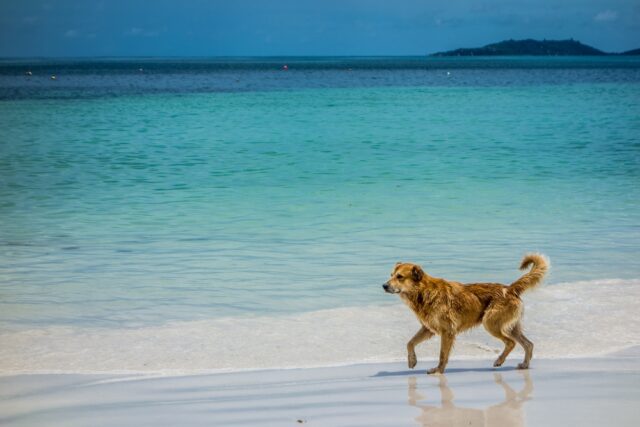
KEY TAKEAWAYS: Some of the beach safety tips for dogs pet owners must follow include bringing plenty of fresh, clean water, providing dogs with enough shade, and keeping them away from potential beach dangers, like jellyfish and other coastal animals or washed-up things. Dogs must also wear proper beach gear to protect them from drowning, overheating, or sunburn.
Nothing beats the summer heat better than going to the beach with your pup!
Watching your dog sprint across the sand and chase the waves is a treat by itself. However, coastal adventures are not without risks, so learning these beach safety tips for dogs is a must for all dog owners.
The heat, saltwater, strong currents, and marine wildlife lurking nearby can quickly turn a fun summer outing into a dangerous situation.
In this guide, let's talk about the common beach hazards you should be aware of and ways you can keep your dog safe while enjoying the beach.
RELATED: 8 Water and Swimming Dangers and Safety Tips for Dog Owners
Why Beach Safety Tips Matter for Dogs
Confident dogs are curious animals; they will explore, sniff, and play wherever they can, but because beaches present unique risks that your dogs aren't usually exposed to, they may not fully realize how dangerous it can be.
Also, not all dogs are natural-born swimmers. Some breeds are more “talented” in swimming than others, especially those with webbed feet.
Common Beach Hazards for Dogs
1. Saltwater
When ingested, the high sodium content of saltwater can pull water out of our dog's tissues and into their intestines, causing severe dehydration (at the cellular level), vomiting, diarrhea, and other gastrointestinal problems.
If your dog accidentally drinks too much saltwater and it goes untreated, it can lead to salt toxicity, which can cause brain swelling, seizures, and death.
2. Hot Sand
They may not look like it, but dogs' paws are sensitive. Coming into direct contact with hot sand, even just for under a minute, can cause deep paw pad burns and blisters.
Hot sand can also significantly raise your dog's core body temperature, potentially leading to heatstroke.
A quick test is to press the back of your hand firmly into the sand for 7 seconds. If you feel it is too hot or uncomfortable, then it can definitely injure your dog's paws.
RELATED: 5 Best Dog Shoes for Summer + Buying Guide
3. Strong Currents
Strong currents are dangerous for dogs as they are for humans, but the difference is that we can understand and navigate our way out of a rip current, whereas dogs cannot.
Plus, the strong beach currents are dangerous for dogs because they can quickly exhaust them and cause panic, even for confident swimmers, and can put them at greater risk of drowning.
4. Sand Impaction
Even if the sand isn't too hot, it can still cause trouble for your dog later, especially when they're digging or playing in it.
As they use their mouths to catch toys, they can ingest sand, and when enough sand accumulates in their bodies, it can cause a dangerous and potentially fatal blockage in the intestines.
RELATED: What To Do If Your Dog Swallows Something He Shouldn't
5. Sun Exposure
Apart from heatstroke, excessive sun exposure can cause sunburn, especially in short-haired, light-colored, or hairless dogs. Exposed areas like the nose, ears, and belly are especially vulnerable to sunburn.
A dog's skin is also susceptible to UV radiation, which can lead to long-term risks, such as squamous cell carcinoma.
RELATED: Is Sunscreen for Dogs Safe to Use?
6. Jellyfish and Other Washed-Up Wildlife or Material
Jellyfish are notoriously dangerous for both humans and dogs. Their tentacles contain venom-filled stingers that can inject painful toxins into our dogs' skin.
Even just a momentary contact with jellyfish can cause severe pain, swelling, breathing difficulties, and in some cases, fatal anaphylactic shock.
On some beaches, there are also other materials you should watch out for, like discarded fishing hooks, lines, or baits, that can be highly tempting for a curious dog.

Before You Go: Beach Preparation Tips for Dogs
Planning ahead can reduce most beach-related risks for dogs. Do these ahead of time!
1. Check That the Beach Is Dog-Friendly
Before heading out, verify the local ordinances with the municipal or state park websites. Check the seasonal dates, the leash laws, access hours, and other details.
Upon arrival, double-check the posted signs to ensure you're in compliance and avoid any hassle or problems during your outing.
RELATED: Best Dog-Friendly Beaches in America
2. Schedule Your Visit Wisely
Check the weather and outdoor temperature. If it's going to be too hot, schedule your beach trip for early morning or late afternoon.
Try to avoid the midday heat so both you and your dog can enjoy the beach without overheating.
3. Pack a Dog Beach Essentials Kit
Some of the must-have items for dogs are:
- Fresh water
- Portable water bowl
- Leash
- Waste bags
- Microfiber towels
- Dog life jacket
- Canine first aid kit
- Umbrella or portable shade
- Sunscreen
- Floating toys
- Paw balm
- Dog shoes
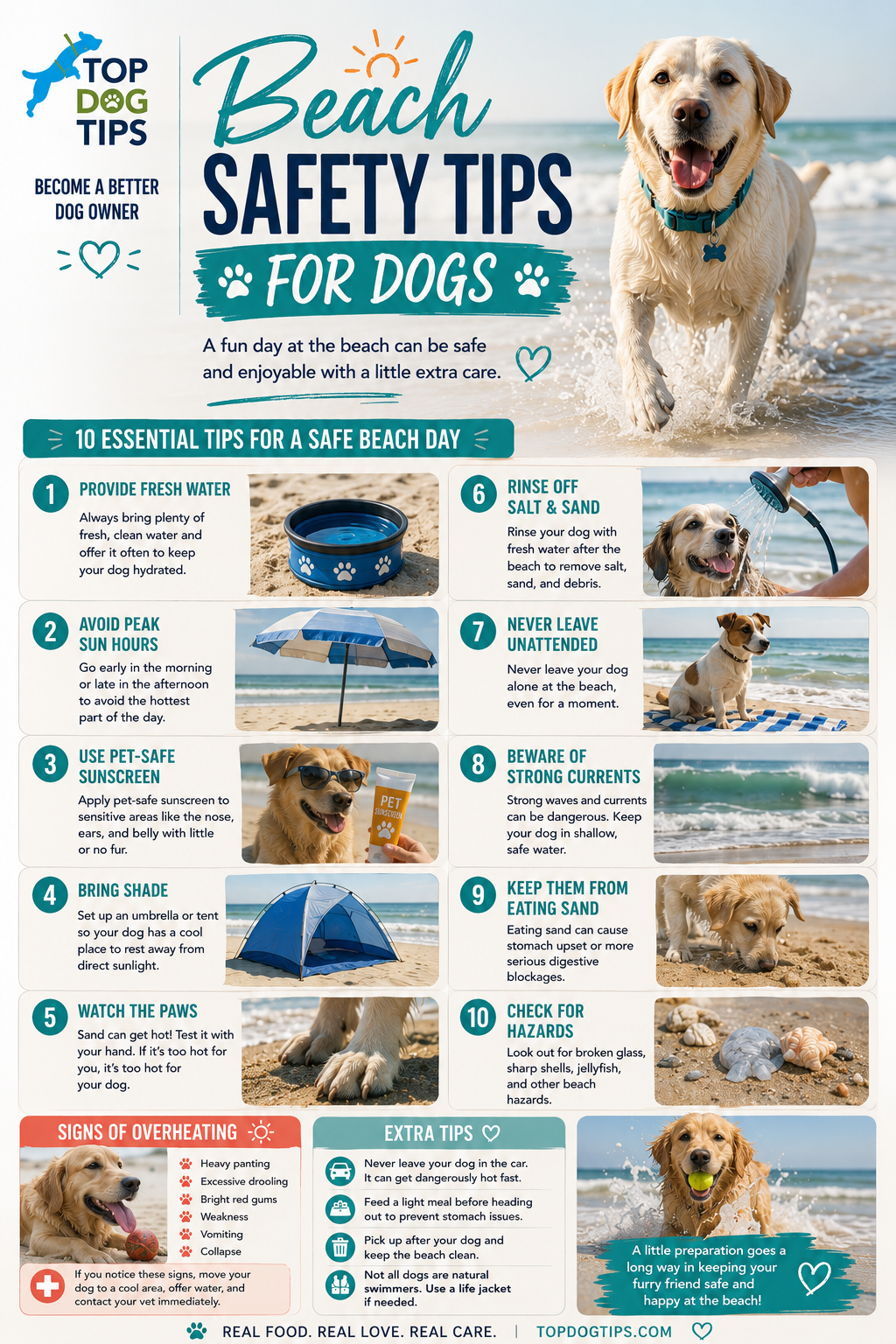
10 Essential Beach Safety Tips for Dogs
 1. Bring Plenty of Fresh Water

Dogs need plenty of water wherever you go, but especially at the beach, to prevent dehydration.
Active dogs can get really thirsty after playing and running around in the sun. If they don't have access to clean water, they might be tempted to drink saltwater, which can lead to poisoning, as we've discussed above.
Make sure to offer your dog fresh drinking water in a collapsible bowl or a portable dog water bottle every 15 to 20 minutes.
2. Have Them Wear Protective Beach Gear
Don't bring your dog to the beach as they are; it's better if they're fully geared up with protective, functional beachwear (bonus points if using cute outfits)!
Get them a well-fitting life jacket for water safety, breathable dog booties for paw protection, and a cooling bandana for extra heat protection.
Sun shirts and pet-safe goggles can also help protect a light-colored or thin-coated dog from harsh UV rays.
RELATED: 20 Cool Dog Summer Accessories
3. Watch for Signs of Heat Exhaustion
The hot sand, intense humidity, and overexertion can rapidly spike a dog's temperature; be sure to spot early signs of heat exhaustion!
Watch out for:
- Excessive panting
- Drooling
- Weakness
- Disorientation or stumbling
- Bright red or blue/purple gums
- Collapsing
If you see one or a combination of these signs, make sure to get them to a shaded area and provide them with sips (not gulps) of cool (not cold) water.
Heat exhaustion can rapidly progress to heatstroke if left untreated.
Read more: Heatstroke in Dogs: 20 Ways to Prevent and Treat It
4. Provide Shade and Rest Breaks
Set up a well-ventilated, UV-blocking shelter for you and your dog to encourage them to rest between activities.
It would be better if you had a portable dog pop-up tent and/or an elevated canopy bed for your dog to cool off. If not, an angled beach umbrella will do just fine.
5. Protect Your Dog's Paws
If you can't walk barefoot on the beach, your dog can't and shouldn't, either.
The hot sand can burn your dog's paws, not to mention the hidden sharp objects like shells, rocks, or broken glass,
Get your dog to wear waterproof, breathable dog shoes, or, at the very least, apply a pet-safe paw protection wax before walking on sand.
RELATED: Top 10 Actionable Tips To Protect Dog Paws on Hot Pavement
6. Supervise Swimming at All Times
If you're swimming in deep water or with strong currents, or going on boat trips, it's best to have your dog wear a life jacket at all times.
 Opt for a brightly colored dog life jacket with a handle at the back, so you can easily see them in the water and pick them up when in trouble.
Also, stay close to your dog when swimming, especially if you know they're not a good swimmer.
7. Be Aware of Tides and Currents
When checking the weather before heading to the beach, it's best to also check the tides and currents for both your and your dog's safety.
Rip currents are invisible hazards that you won't really see to get away from, so knowing this beforehand will definitely save you from potential trouble later on.
You can find this information on the NOAA Tides and Currents website.
8. Watch for Marine Life and Wildlife
Since this is not something you can know beforehand, especially if visiting a beach for the first time.
Keep your dog leashed upon arrival, and scan the high-tide line to check and avoid any coastal wildlife, including jellyfish and other stinging creatures, marine life mammals like seals (that can deliver severe bites), and predatory birds (that can easily pick up small dogs), or even rotting seaweeds that can cause gut blockages.
9. Keep Your Dog Visible and Identifiable
Before heading out, it's important that your dog has updated ID tags and a microchip, and, if possible, a GPS tracker, too.
These will help you locate your dog at all times, and if the unthinkable happens and they get lost, they can be clearly identified and returned to you.
RELATED: Microchip Technology Brings “Dead” Dog Back to His Family
10. Rinse Your Dog After the Beach
After your beach trip, it's important to rinse your dog thoroughly with fresh water to remove salt and sand and reduce the skin irritation that would otherwise occur.
You can do this by thoroughly flushing their fur for 3 to 5 minutes, especially on their belly, armpits, groin, and between their toes, where sand can easily get trapped. Check your dog's ears, too.
This is an important step before the sand dries on your dog's skin, as it will be much harder to remove later.
When you get home, give them a bath with a dog-specific shampoo and dry them thoroughly.

FAQs Related to Beach Safety Tips
Should dogs always wear life jackets when swimming?
While not every dog needs a life jacket, it's strongly recommended when boating, swimming in open water, in strong currents, or for puppies, senior dogs, and breeds that aren't strong swimmers.
A properly fitted life jacket provides extra buoyancy, making it easier to rescue your dog in an emergency.
How do I remove sand from my dog's coat after the beach?
Rinse your dog thoroughly with fresh water before the sand dries.
Once the coat is dry, brush it to remove any remaining sand and check the paws, ears, and skin for any trapped debris to prevent skin abrasion and irritation.
Can dogs get sick from algae or polluted beach water?
Yes. Harmful algal blooms, bacteria, and other contaminants can make dogs seriously ill if they drink or swim in affected water.
Avoid beaches with posted water-quality warnings, and prevent your dog from drinking seawater or stagnant water.
What should I do if my dog gets stung by a jellyfish?
Immediately carry your dog away from the jellyfish, and rinse the affected area with seawater (not fresh water) to help prevent further venom release. Vinegar is also a good option for rinsing.
Afterward, contact your veterinarian promptly, especially if your dog has severe pain, swelling, trouble breathing, or other unusual symptoms.
Should I let my dog play with driftwood or seashells?
It's best to avoid them. Driftwood can splinter and cause mouth or digestive injuries, while sharp seashells can cut your dog's mouth or paws.
Bring durable dog toys instead for safer beach play.

Beach Safety Tips for Dogs: Before You Go…
Going on outdoor adventures in summer is always exciting, but we must not forget to prepare and follow these beach safety tips for dogs.
Following these will help prevent injuries and dangers, and help you spend an enjoyable day with your furry pal.
A little preparation can go a long way!
Do you have any special preparation you do before visiting a beach with your dog? What's your favorite dog-friendly beach? Let's connect on social media!
You can also read more of our recommended articles linked below.